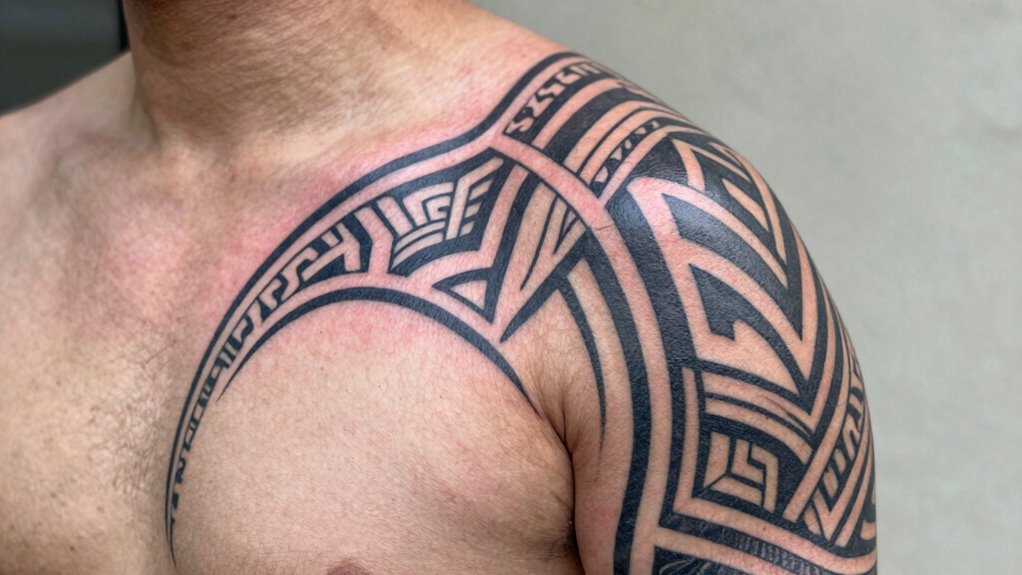

Men’s shoulder tattoos offer versatile placement options like the deltoid, shoulder cap, and back, allowing you to display or hide your ink easily. Expect moderate pain, especially over bony areas, with discomfort easing in a few days. The healing process takes 2–4 weeks, so proper aftercare is essential. Focus on smooth designs, symmetry, and choosing a skilled artist. To keep your tattoo vibrant long-term, follow maintenance tips—if you keep going, you’ll find out more to make your tattoo truly stand out.
Key Takeaways
- Placement options include deltoid, shoulder cap, blade, front, and side, each offering different visibility and design flow.
- Shoulder tattoos are moderately painful, with discomfort near bony areas; breaks help manage pain during sessions.
- Proper aftercare—cleaning, moisturizing, and UV protection—ensures optimal healing and long-lasting vibrancy.
- Design rules emphasize color blending, symmetry, and scale to complement shoulder contours and personal style.
- Regular touch-ups every 1-3 years help maintain color vibrancy and detail over time.

Tattoo Goo Tattoo Aftercare Kit, 3 Piece Set, Includes Antimicrobial Soap, Tattoo Balm & Healing Lotion, Main Vibrant Color & Glow, Complete Kit for Fresh Ink, Ongoing Ink Maintenance & Piercing Care
- Complete Tattoo Aftercare Set: Includes soap, balm, and lotion
- Antimicrobial Soap with Broad Protection: Formulated with 0.5% PCMX, alcohol-free
- Protective Tattoo Balm: Creates a breathable barrier for healing
As an affiliate, we earn on qualifying purchases.
As an affiliate, we earn on qualifying purchases.
Why Should You Get a Shoulder Tattoo? Benefits and Unique Appeal
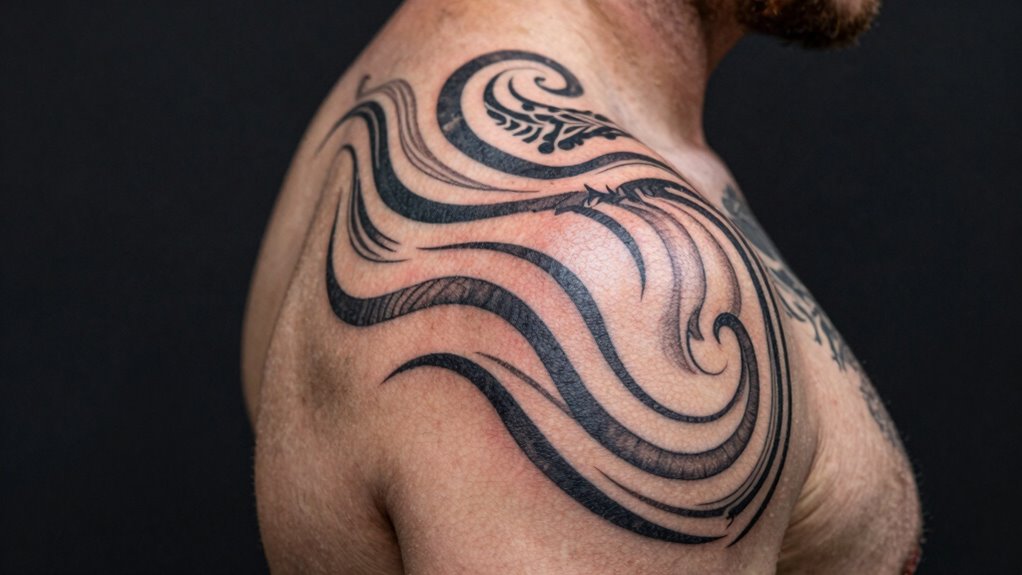
Getting a shoulder tattoo offers a blend of visibility and versatility that makes it a popular choice for many men. The cultural significance behind shoulder tattoos can carry deep symbolism meanings, often representing strength, protection, or personal milestones. Because the shoulder provides a prominent yet easily concealable area, you can display meaningful designs or keep them private when needed. This flexibility adds to the tattoo’s unique appeal, allowing you to adapt its visibility to different settings. Additionally, shoulder tattoos often hold cultural or spiritual importance, making them a powerful way to express identity or heritage. Whether you choose a symbolic image or a design with personal significance, the shoulder provides an ideal canvas to showcase meaningful artwork that resonates deeply with you. Incorporating color accuracy can also enhance the visual impact of your tattoo design, making the colors more vibrant and true to the original artwork. Furthermore, understanding free floating tattoo placement options can help you decide how to best position your design for long-term satisfaction. Exploring design rules can guide you in selecting artwork that complements your shoulder anatomy and personal style. Considering wound healing and proper aftercare can ensure your tattoo heals well and maintains its quality over time. Additionally, being aware of long-term care strategies can help preserve your tattoo’s appearance for years to come.

H2Ocean Aquatat Tattoo Healing Ointment – Tattoo Aftercare Cream for Tattoo Supplies – Fragrance- & Dye-Free Tattoo Care Ointment with Vitamins A & B – 0.75 oz
- Protects and Heals Skin: Seals skin with a moisturizing barrier
- Versatile Tattoo Care: Suitable for all tattoo healing stages
- Free of Alcohol, Fragrance, and Dyes: Gentle on sensitive skin
As an affiliate, we earn on qualifying purchases.
As an affiliate, we earn on qualifying purchases.
What Are the Best Placement Options on the Shoulder for Men?
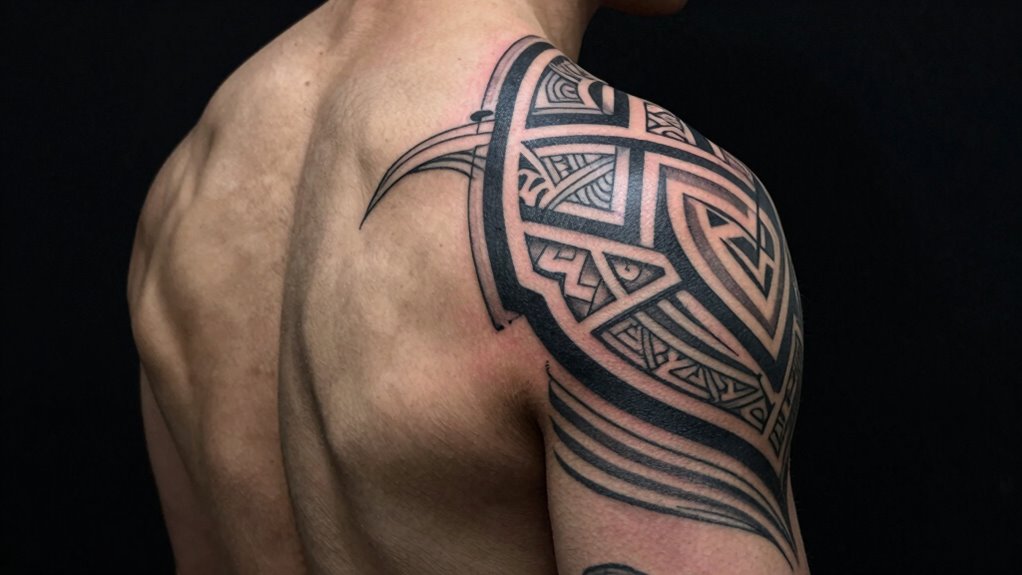
The shoulder offers several prime placement options for men seeking impactful tattoo designs. Choosing the right spot enhances shoulder symmetry and emphasizes tattoo symbolism, making your tattoo unique and meaningful. The deltoid provides a broad canvas for larger designs, while the shoulder cap suits smaller, bold symbols. The shoulder blade allows for intricate artwork, aligning with your body’s natural shape. Consider the front or side shoulder for more visibility or the back for a subtle statement. Remember, placement affects how your tattoo flows with shoulder movement and symmetry. Additionally, understanding tattoo placement considerations can help ensure your design remains visually appealing over time.

Sunscreen Body Patches UPF50+ (5 units/Pack), Extra Large UV Sun Protection Patches, Targeted Sun Protection, Sweat-Resistant, Chemical-Free, Hypoallergenic.
- FSA/HSA Eligible: Eligible for FSA or HSA reimbursement
- Extra-Large UV Coverage: Large patches for maximum protection
- UPF 50+ Sun Protection: Blocks over 98% of UV rays
As an affiliate, we earn on qualifying purchases.
As an affiliate, we earn on qualifying purchases.
How Painful Is a Shoulder Tattoo? What to Expect During Your Session
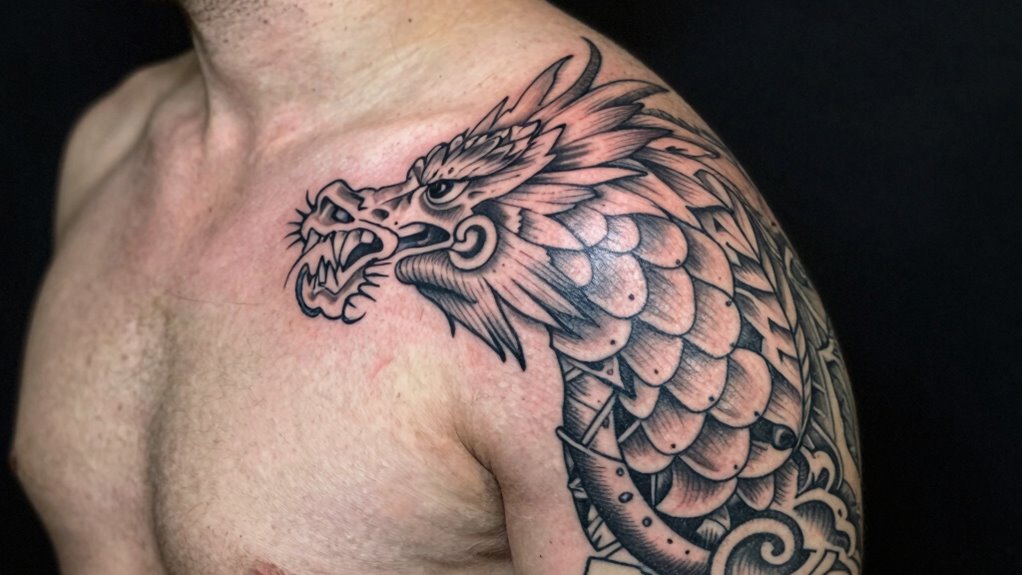
Choosing the right placement for your shoulder tattoo can influence not only its look but also how you experience the process. Generally, shoulder tattoos are moderately painful, but your pain management strategies can make a difference. During your session, you might feel a mix of dull ache, scratching, or sharp stings, especially near bony areas like the shoulder blade or collarbone. Your artist may suggest breaks to help manage discomfort. It’s essential to communicate your pain levels and follow their advice for comfort. Expect some redness or soreness afterward, but these sensations should subside within a few days. Preparing mentally and physically can help you better handle session expectations, making the experience smoother and more manageable. Understanding pain management techniques can also improve your overall tattoo experience. Being aware of common discomfort points can help you anticipate and prepare for sensitive areas. Additionally, proper post-tattoo care can significantly influence healing and comfort during recovery. Incorporating calming essential oils like lavender or eucalyptus into your healing routine might also promote relaxation and reduce swelling during recovery. Moreover, staying well-hydrated and avoiding alcohol before your session can help reduce discomfort during tattooing.

Zonon 5 Pcs Markers Skin Marker Pen Purple Tattoo Pen, 0.5mm & 1mm
- Tip Sizes: 0.5mm and 1mm tips for precision
- Versatile Use: Suitable for beginners and professionals
- Safe Ink: Non-toxic, skin-safe, and non-irritating
As an affiliate, we earn on qualifying purchases.
As an affiliate, we earn on qualifying purchases.
How Long Does It Take for a Shoulder Tattoo to Heal? Tips and Timeline
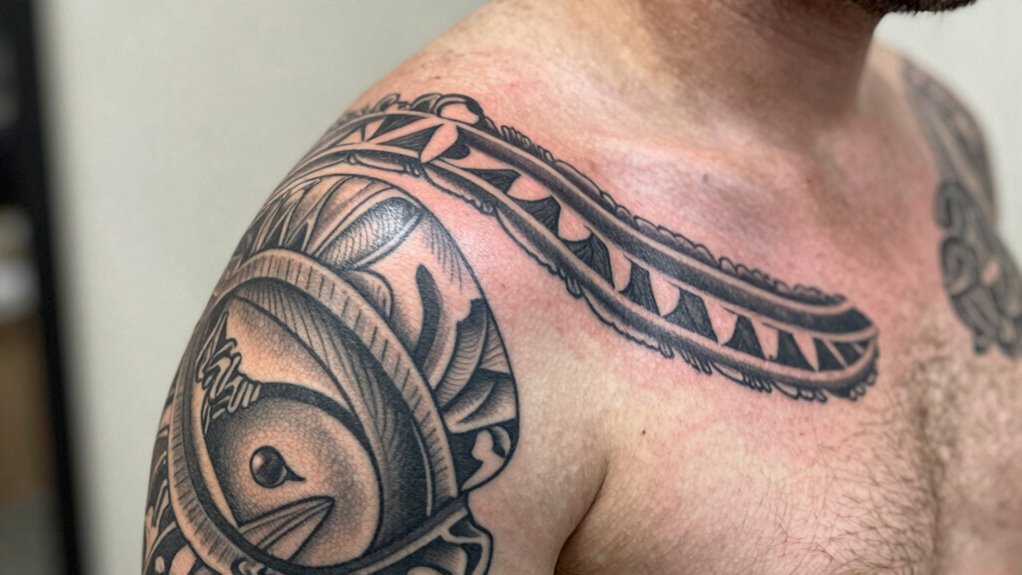
Your shoulder tattoo typically takes about two to four weeks to heal, but this can vary depending on care and individual factors. To guarantee a smooth recovery, follow proper aftercare tips like keeping the area clean and moisturized. Maintaining good sleep hygiene and ensuring adequate rest can also support your body’s healing process. Additionally, understanding the healing process can help you recognize what to expect during each stage and when to seek professional advice if needed. Being aware of connected home fitness strategies can promote overall wellness, which indirectly supports skin healing and recovery. Incorporating proper hydration into your routine can further enhance the healing process by aiding skin repair and reducing inflammation. Staying informed about tattoo aftercare guidelines can also prevent complications and ensure optimal results from your tattoo. Understanding the healing timeline and taking proactive steps can help you get the best results from your tattoo.
Healing Timeframe Overview
Understanding how long a shoulder tattoo takes to heal is essential for proper aftercare and ensuring your artwork looks its best. Typically, the healing process spans about 2 to 4 weeks, but this can vary based on individual health, tattoo size, and aftercare.
During the first week, expect scabbing, peeling, and some discomfort as your body works to repair the skin. Proper tattoo aftercare, including keeping the area clean and moisturized, helps prevent infection and promotes faster healing. Incorporating herbal infusion tools such as herbal infusers or decarboxylators can aid in soothing the skin and supporting healing processes.
By the second and third weeks, the scabs will flake off naturally, revealing the vibrant design underneath. Complete healing, where the skin feels normal again, may take up to a month or more. Additionally, factors like proper skin care and avoiding excessive sun exposure can significantly influence the healing timeline. Staying patient and diligent with aftercare ensures the best results and preserves your shoulder tattoo’s appearance, especially when considering proper healing techniques to optimize recovery.
Tips for Faster Recovery
To speed up your shoulder tattoo’s healing process, focus on simple aftercare practices that support your body’s natural repair work. Keep the area clean and moisturized, and avoid picking at scabs, which can damage the design and delay healing. Proper aftercare guarantees your tattoo retains its vibrancy and detail, preserving its cultural or personal meaning longer. Protect your tattoo from direct sunlight, as UV rays can fade colors and compromise color symbolism, especially if the tattoo has cultural significance. Staying hydrated and eating nutrient-rich foods boost your body’s recovery. Remember, healing times can vary based on individual health, but generally, lighter phases take about two weeks, with full healing lasting up to a month. Additionally, understanding the art conservation principles involved can help you make informed decisions during the healing process. Maintaining proper aftercare routines, such as avoiding harsh chemicals, further supports optimal healing and maintains the integrity of your tattoo. Incorporating UV protection practices can also prevent premature fading and preserve your tattoo’s appearance over time. Being aware of healing timelines can help set realistic expectations and reduce unnecessary worry during recovery. Applying proper techniques during aftercare can also minimize the risk of infection and ensure your tattoo heals beautifully.
How Can You Design a Shoulder Tattoo? Rules and Creative Tips
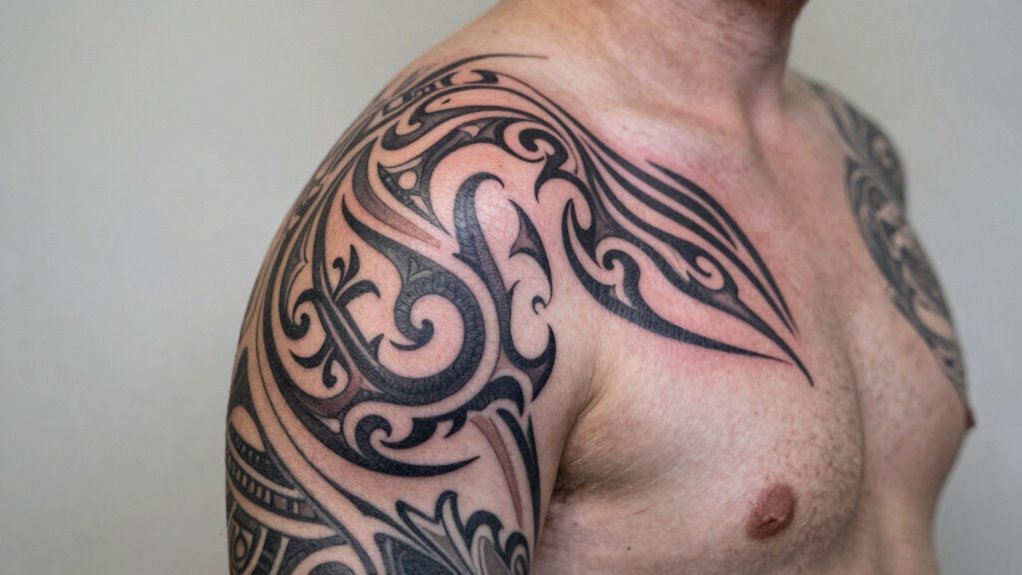
Designing a shoulder tattoo involves balancing creativity with practical considerations to guarantee it complements your physique and personal style. To create a striking design, consider these tips: 1. Focus on color blending to ensure smooth gradual change and harmony between shades. 2. Prioritize design symmetry for a balanced look that enhances your shoulder’s natural shape. 3. Choose a theme that reflects your personality, whether bold or subtle. 4. Keep scale in mind, making sure the tattoo fits well within your shoulder’s contours without overwhelming or underwhelming your space. Additionally, selecting sustainable materials can help ensure your tattoo process aligns with eco-friendly practices. Proper piercing care and hygiene during the tattoo process are essential to prevent infection and ensure optimal healing. Moreover, understanding proper aftercare routines can significantly influence the longevity and appearance of your tattoo. Being aware of skin type considerations can also help in choosing the right ink and technique for lasting results.
What Common Planning Mistakes Should You Avoid for Your Shoulder Tattoo?

One common mistake to avoid when planning your shoulder tattoo is neglecting proper placement and size considerations. Oversized designs or misaligned placement can distort design symbolism and affect overall aesthetics. To visualize, consider this:
| Placement Area | Design Size | Planning Budget |
|---|---|---|
| Shoulder Cap | Small to medium | Moderate |
| Deltoid Muscle | Medium | Moderate to high |
| Shoulder Blade | Large | High |
| Front Shoulder | Varies | Varies |
Ignoring these factors can lead to regret or additional costs. Be clear about your design symbolism and how it fits your shoulder anatomy. Planning a realistic budget ensures you get quality work without surprises. Proper planning avoids costly mistakes and helps bring your vision to life seamlessly.
How to Find the Right Artist for Your Men’s Shoulder Tattoo
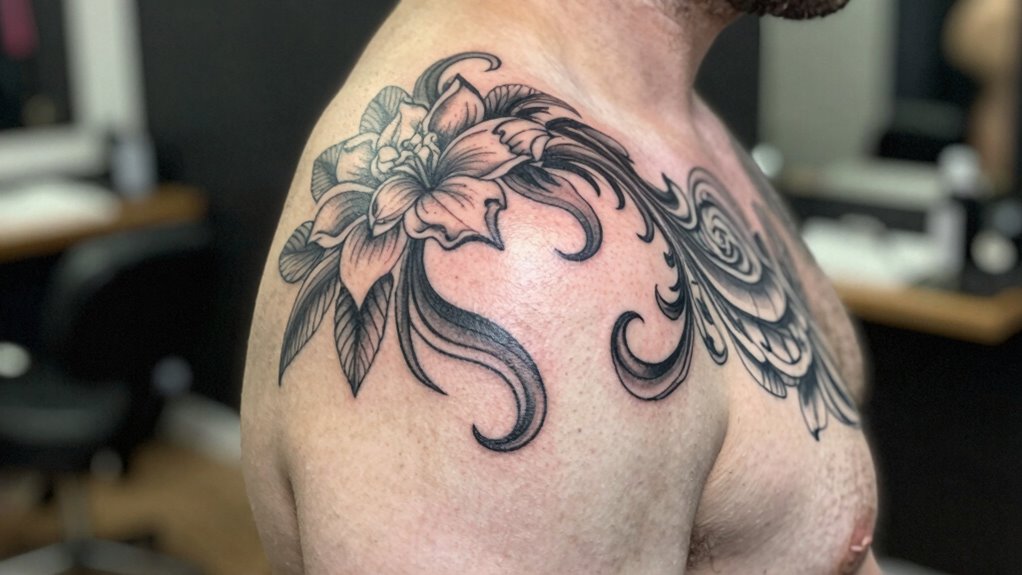
Finding the right artist for your men’s shoulder tattoo is essential to guarantee you get a high-quality, lasting result. To choose wisely, consider these steps:
Choosing the right artist ensures your men’s shoulder tattoo is high-quality and lasts a lifetime.
- Review their portfolio for diverse tattoo styles that match your vision.
- Check if they’ve experience with shoulder tattoos, ensuring they understand the area’s unique contours.
- Ask about their expertise with ink colors, especially if you want vibrant or subtle shades.
- Read reviews or get recommendations to gauge their professionalism and skill level.
A skilled artist can translate your ideas into a stunning design, whether it’s bold blackwork or colorful imagery.
Don’t rush—finding someone who aligns with your style and understands your preferences guarantees a tattoo you’ll love for years.
How Can You Maintain Your Shoulder Tattoo’s Look Over Time?

To keep your shoulder tattoo looking sharp, you need to protect it from sun damage by applying sunscreen regularly.
Moisturizing keeps the skin healthy and prevents the ink from fading prematurely.
Don’t forget to schedule touch-ups as needed to maintain the vibrancy of your tattoo over time.
Protect From Sun Damage
Ever wonder how to keep your shoulder tattoo looking vibrant and sharp over time? Sun protection is key. To prevent fading, follow these tips:
- Apply a broad-spectrum sunscreen with at least SPF 30 every day, especially when outdoors.
- Wear clothing choices that cover your shoulder tattoo, like sleeveless shirts or hats with brims.
- Seek shade during peak sunlight hours, typically between 10 a.m. and 4 p.m.
- Reapply sunscreen regularly, especially after sweating or swimming.
Moisturize Regularly
Maintaining your shoulder tattoo’s vibrant look requires consistent moisturizing, especially as your skin naturally loses moisture over time. Incorporate moisturizer into your daily skincare routine to keep your skin hydrated and healthy, which helps preserve your tattoo’s color and sharpness.
Use a gentle, fragrance-free lotion or specialized tattoo aftercare products that promote healing and prevent dryness. Regular moisturizing reduces cracking and fading, ensuring your tattoo remains eye-catching for years.
Be diligent, especially during colder months or in dry environments, as these conditions can dehydrate your skin. Remember, a well-maintained skincare routine is essential for long-term tattoo care, helping your shoulder tattoo stay vibrant and well-defined over time.
Schedule Touch-Ups
Scheduling regular touch-ups is essential for keeping your shoulder tattoo looking sharp and vibrant over time. As your tattoo ages, color saturation can fade, affecting overall appearance and tattoo longevity.
To maintain its freshness, consider these steps:
- Schedule touch-ups every 1-3 years, depending on exposure and skin type.
- Visit a professional artist to restore faded colors and define details.
- Keep your skin moisturized to support proper healing and color retention.
- Protect your tattoo from excessive sun exposure, which accelerates fading.
Frequently Asked Questions About Men’s Shoulder Tattoos

Many people have questions about men’s shoulder tattoos before getting inked, and understanding these common concerns can help you make informed decisions.
One frequent question revolves around tattoo styles; whether you prefer traditional, realism, or tribal designs, your shoulder offers versatile options.
Your shoulder can showcase traditional, realism, or tribal tattoo styles with versatile options.
When it comes to color choices, some opt for bold, vibrant hues, while others prefer black and gray for a more subtle look.
Consider how your tattoo style complements your personal aesthetic and how colors will age over time.
You might also wonder about the best placement for visibility or concealment.
Knowing your preferred style and color palette upfront ensures you work with your artist to create a design you’ll love long-term.
Asking these questions helps you feel confident about your shoulder tattoo journey.
Frequently Asked Questions
What Are the Best Colors for Men’s Shoulder Tattoos?
Think of your shoulder tattoo as a canvas waiting to showcase bold hues. For lasting impact, go for classic colors like black and gray for ink longevity, or vibrant shades like blue, red, and green for eye-catching contrast.
To guarantee your tattoo ages well, match colors with your skin tone and consider color coordination with your overall style. Bright colors can fade faster, so choose wisely for a timeless look.
How Can I Prevent Tattoo Fading Over Time?
To prevent tattoo fading over time, you should focus on tattoo longevity and color preservation.
Protect your tattoo from sun exposure by applying a high-SPF sunscreen daily, especially on your shoulder.
Keep your skin moisturized to maintain ink vibrancy, and follow your artist’s aftercare instructions diligently.
Avoid excessive friction or scratching, and stay hydrated.
These steps help preserve your tattoo’s colors and ensure it looks fresh for years to come.
Are There Specific Styles Suited for Shoulder Tattoos?
Imagine a knight’s armor, standing tall—shoulder tattoos suit various styles like geometric, tribal, or realistic. These styles highlight shoulder anatomy’s natural curves.
These designs often symbolize strength, protection, or personal meaning, making them ideal choices. You should choose styles that complement your shoulder’s shape and flow with your movement.
Bold lines and shading work well here, ensuring your tattoo maintains its symbolism and visual impact over time.
Can Shoulder Tattoos Be Easily Covered up if Needed?
Yes, shoulder tattoos can be easily covered up if needed. You have several cover-up options, such as adding new tattoo designs that incorporate or obscure the existing ink.
Tattoo concealing techniques work well because the shoulder’s broad surface allows for larger or darker designs to effectively hide previous artwork.
Consulting a skilled tattoo artist ensures the best results for a seamless cover-up, making your shoulder tattoo adaptable to your changing preferences or circumstances.
What Are the Risks of Shoulder Tattoo Infections?
If you ignore proper tattoo sterilization, you risk infection symptoms that could threaten your health. Poor sterilization can introduce bacteria, leading to painful swelling, redness, or pus.
Don’t underestimate the danger; these infections can escalate quickly if left untreated. Always choose a professional artist who follows strict sterilization procedures.
Stay alert during healing, and if you notice symptoms, seek medical advice immediately to prevent serious complications.
Conclusion
Getting a shoulder tattoo is like planting a flag on your personal landscape—bold and unique. By choosing the right placement, design, and artist, you guarantee it stands the test of time. Remember, patience during healing and proper maintenance keeps your ink looking fresh as a daisy. So, gear up for this journey, and let your shoulder be the canvas that tells your story—because your skin deserves a masterpiece.