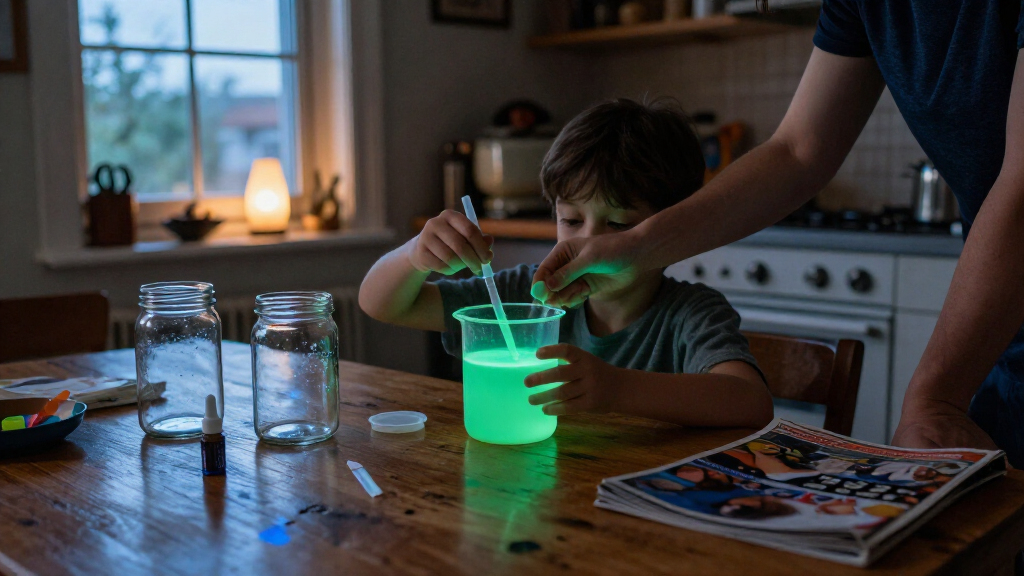
Glow-in-the-dark science kits pair hands-on projects with a satisfying light effect, but the best choice depends on whether your child wants experiments, a model, or a take-home creation. I rank the Thames & Kosmos Glow-in-the-Dark Science Lab as best overall for its broad experiment-focused approach. The National Geographic Mega Science Experiment Kit stands out for variety, while the Blue Marble Bouncy Ball Kit is a focused pick for a quick, tangible project. The main tradeoff is breadth versus simplicity: larger kits offer more activities but can need more setup, while single-project kits are easier to finish but offer less variety. Read on for the full breakdown and help matching a kit to your child’s age, interests, and tolerance for hands-on mess.

Prime made for students and young adults
- Fast, free delivery for dorm and study essentials
- Prime Video and Amazon Music included
- Member-only deals
Key Takeaways
- The Thames & Kosmos lab is the strongest all-around fit for buyers who want glow effects tied to multiple science activities rather than one finished object.
- National Geographic’s Mega kit prioritizes breadth, while its crystal-growing kit puts more of the experience into one slower, display-worthy project.
- Several kits focus on a particular interest: dinosaurs, space, minerals, candy, terrariums, or bouncy-ball making can be a better match than a general experiment set.
- A glow effect does not guarantee a strong science experience; check whether the kit teaches a process, supports repeat experiments, or mainly produces a glowing result.
- Age range and adult involvement matter as much as activity count: a compact, guided project may suit a younger beginner better than a broad kit with several steps and supplies.
| Fluorescent Rock Science Kit with 6 Minerals and UV Flashlight |  | Best for Mineral Discovery | Brand: PIBEX | Mineral count: 6 | Minerals: Pink Calcite, Lapis Lazuli, Fluorite, Purple Sodalite, Red Corundum, and Flame Stone | VIEW LATEST PRICE | See Our Full Breakdown |
| Thames & Kosmos Glow-in-the-Dark Science Lab STEM Experiment Kit |  | Best for Guided Chemistry Experiments | Brand: Thames & Kosmos | Activities: 5 | Age range: 8 years and up | VIEW LATEST PRICE | See Our Full Breakdown |
| National Geographic Jumbo Glow-in-the-Dark Crystal Growing Kit for Kids |  | Best for a Slow-Build Project | Age range: 8 years and up | Educational objectives: Exploratory skills, hand-eye coordination, and STEM learning | Included components: Crystal growing kit, learning guide, and fluorite specimen | VIEW LATEST PRICE | See Our Full Breakdown |
| National Geographic Glow-in-the-Dark T. Rex Dissection Lab Kit |  | Best for Dinosaur-Themed Discovery | Brand: Blue Marble | Age range: 6 years and up | Educational objective: STEM | VIEW LATEST PRICE | See Our Full Breakdown |
| Glow-in-the-Dark Science Experiments Kit for Kids Ages 8–12 |  | Best for Activity Variety | Brand: PW | Recommended age: Title: ages 8–12; manufacturer recommendation: 12 months–3 years | Activities: 15+ | VIEW LATEST PRICE | See Our Full Breakdown |
| Tasty Labs Groovy Glowing Candy Lab Experiment Set |  | Best for Edible Experiments | Brand: Thames & Kosmos | Recommended age: 6–14 years | Included ingredients: Fruit punch mix (76 g), tropical pineapple mix (76 g), gelatin (24 g), sour sugar mix (30 g) | VIEW LATEST PRICE | See Our Full Breakdown |
| Smartivity Glow Magic Science Kit for Kids Ages 6–14 |  | Best for Experiment Variety | Brand: Smartivity | Recommended age: 6–14 years | Experiments: 20 glow-in-the-dark experiments | VIEW LATEST PRICE | See Our Full Breakdown |
| National Geographic Glow-in-the-Dark Mega Science Experiment Kit for Kids |  | Best for Glow-In-The-Dark Materials | Brand: Blue Marble | Age range: 8 years and up | Educational objective: STEM | VIEW LATEST PRICE | See Our Full Breakdown |
| National Geographic Glow-in-the-Dark Solar System Model Kit |  | Best for a Glow-In-The-Dark Display | Brand: Blue Marble | Age range: 8 years and up | Planets included: 8 planets and the Sun | VIEW LATEST PRICE | See Our Full Breakdown |
| Blue Marble Glow-in-the-Dark Bouncy Ball Science Kit for Kids |  | Best for Group-Friendly Repeat Making | Brand: Blue Marble | Recommended age: 6 years and up | Maximum balls: 45 | VIEW LATEST PRICE | See Our Full Breakdown |
| Creativity for Kids Grow ‘N Glow Terrarium Kit |  | Best for Glow-in-the-Dark Nature Play | Recommended age: 6+ | Planting cycles: 2 | Seeds: Chia and wheatgrass | VIEW LATEST PRICE | See Our Full Breakdown |
| glow in the dark science kit | Brand | Included components | Model number | Dimensions |
|---|---|---|---|---|
| Fluorescent Rock Science Kit w | PIBEX | Display tray, learning guide, magnifying glass, UV flashlight, and 6 mineral specimens | EC727 | — |
| Thames & Kosmos Glow-in-the-Da | Thames & Kosmos | Plaster powder, plastic mold, glow-in-the-dark stickers, UV flashlight, cardboard test tube stand, small parts, yellow and pink UV pigments, beakers, test tube with cap, brush, spatula, and manual | — | 8.8 x 2.5 x 11 inches |
| National Geographic Jumbo Glow | — | Crystal growing kit, learning guide, and fluorite specimen | NGJUMCRYSTAL2 | — |
| National Geographic Glow-in-th | Blue Marble | Dinosaur mold, glow-in-the-dark skeleton, gel refill pack, dissection tool, tweezers, instructions, and learning guide | RTNGTREXLAB | — |
| Glow-in-the-Dark Science Exper | PW | Instruction manual | PW-STEM-LSK-100 | 10.91 x 8.46 x 1.81 inches |
| Tasty Labs Groovy Glowing Cand | Thames & Kosmos | — | 550036 | 8.8 x 2.5 x 11 inches |
| Smartivity Glow Magic Science | Smartivity | Box and messy mat | SMRT 1214 | 9.84 x 9.84 x 2.36 inches |
| National Geographic Glow-in-th | Blue Marble | Glowing crystal seed, glowing putty with storage tin, wernerite rock, two slime powders, two slime containers | NGMEGAGID | 10 x 2.17 x 7.28 inches |
| National Geographic Glow-in-th | Blue Marble | 6 paint colors, glow-in-the-dark accent paint, brush, palette, decals, facts poster, instructions | NGSOLARSYS | 7.09 x 2.36 x 12.01 inches |
| Blue Marble Glow-in-the-Dark B | Blue Marble | 2 packets of glow-in-the-dark polymer powder, 5 molds, 6 powder colors, instructions | ABBALLKIT45 | 6.06 x 2.36 x 6.18 inches |
| Creativity for Kids Grow ‘N Gl | — | — | — | — |
More Details on Our Top Picks
Fluorescent Rock Science Kit with 6 Minerals and UV Flashlight
This kit makes the most sense for kids who want to examine real fluorescent minerals, rather than make a glow-themed project. Six specimens, a 365 nm UV flashlight, magnifier, and labeled tray give children several ways to compare and identify what they see. That geology focus sets it apart from the Thames & Kosmos Glow-in-the-Dark Science Lab, which centers on chemistry experiments and pigments instead of rock specimens. The guide and display tray add structure for young collectors, though the kit offers fewer varied activities than a multi-experiment set. I’d also factor in the missing AA battery: the main viewing tool needs one before the fluorescence activity can begin. Its specimens are about 1.2–1.6 inches, so they’re suited to close inspection, not large display pieces.
Pros:- Includes six natural mineral specimens for direct comparison
- 365 nm UV flashlight supports fluorescence viewing
- Magnifying glass and labeled tray help with close inspection and identification
- Learning guide adds hands-on geology activities
Cons:- Requires one AA battery that is not included
- Focused on mineral examination rather than a wide range of experiments
Best for: Children ages 6 and up who are curious about geology and want to inspect and organize real mineral specimens under UV light.
Not ideal for: Families seeking a broad set of chemistry experiments or an all-ready-to-use kit, since this focuses on six minerals and the flashlight battery is not included.
- Brand:PIBEX
- Mineral count:6
- Minerals:Pink Calcite, Lapis Lazuli, Fluorite, Purple Sodalite, Red Corundum, and Flame Stone
- Mineral size:Approximately 1.2–1.6 inches each
- UV flashlight wavelength:365 nm
- Battery requirement:1 AA battery, not included
- Included components:Display tray, learning guide, magnifying glass, UV flashlight, and 6 mineral specimens
- Recommended age:6 years and up
- Model number:EC727
Our verdict“Choose this for a young rock enthusiast who would rather investigate real minerals than make glowing chemistry projects.”
Thames & Kosmos Glow-in-the-Dark Science Lab STEM Experiment Kit
For kids who want more than one glowing result, this set offers five distinct activities involving glowing substances, neon pigments, light, and phosphorescence. The included beakers, test tube, tools, pigments, and manual make it a more structured chemistry choice than the National Geographic Jumbo Glow-in-the-Dark Crystal Growing Kit, which centers on growing one crystal over several days. Its UV flashlight and box-made blacklight showcase also give the experiments a clear way to present their results. The tradeoff is that this is a small activity set, not a long-term project collection: five experiments provide less breadth than the PW kit’s listed 15-plus activities. A AAA battery is required, and kids ages 8 and up may need adult help with setup and handling the small parts.
Pros:- Five activities explore glowing substances, pigments, light, and phosphorescence
- Includes a UV flashlight and two UV pigments
- Kit box becomes a blacklight showcase for finished creations
- Supplies several experiment tools and a manual
Cons:- Requires one AAA battery
- Offers fewer listed activities than the PW kit with 15-plus projects
- Includes small parts that may call for adult help during setup
Best for: Families with children ages 8 and up who want several guided glow-focused chemistry activities and a built-in way to display the results.
Not ideal for: Buyers seeking a long sequence of varied projects or a kit ready to use without supplying a battery.
- Brand:Thames & Kosmos
- Activities:5
- Age range:8 years and up
- Included components:Plaster powder, plastic mold, glow-in-the-dark stickers, UV flashlight, cardboard test tube stand, small parts, yellow and pink UV pigments, beakers, test tube with cap, brush, spatula, and manual
- Battery:1 AAA battery
- Material:Plastic
- Dimensions:8.8 x 2.5 x 11 inches
- Weight:12.8 ounces
- Warranty:1 year against manufacturer defects
Our verdict“Pick this for a child who wants several guided glow-chemistry activities, not the longest project list in the roundup.”
National Geographic Jumbo Glow-in-the-Dark Crystal Growing Kit for Kids
This kit is a better match for kids who enjoy waiting for a result than for those who want a string of quick experiments. The central activity is growing a jumbo glow-in-the-dark crystal over a few days, with a fluorite specimen and learning guide to connect the project to earth science. Compared with the Thames & Kosmos Glow-in-the-Dark Science Lab, it offers less activity variety, but the extended growth process gives children one project to observe over time. That slower pace is the main tradeoff: the glow payoff is not immediate, and the listing describes a single crystal-growing kit rather than a broad experiment assortment. With an 8-and-up age recommendation, it also suits older children better than the PIBEX mineral kit, which is aimed at ages 6 and up.
Pros:- Grows a jumbo crystal that glows in the dark
- Includes a fluorite specimen for an additional earth-science connection
- Learning guide explains crystal science
- Multi-day growth gives children a project to observe over time
Cons:- Crystal growth takes a few days rather than producing an immediate result
- Centers on one main growing activity rather than a broad set of experiments
- Listed for ages 8 and up
Best for: Children ages 8 and up who like earth science and can stay interested in observing a crystal as it grows over several days.
Not ideal for: Kids who want immediate glow effects, multiple separate experiments, or an activity suited to younger children under the listed age recommendation.
- Age range:8 years and up
- Educational objectives:Exploratory skills, hand-eye coordination, and STEM learning
- Included components:Crystal growing kit, learning guide, and fluorite specimen
- Item dimensions:7.24 x 2.37 x 10 inches
- Item weight:380 g
- Theme:Earth science
- Number of items:1
- Model number:NGJUMCRYSTAL2
Our verdict“Choose this for an older child who prefers watching one glowing earth-science project develop over several days.”
National Geographic Glow-in-the-Dark T. Rex Dissection Lab Kit
This pick turns glow-in-the-dark science into a dig-and-assemble challenge: children excavate a synthetic T. rex mold, then build a skeleton about 9.5 inches long. The included refill pack means the excavation can be repeated, a practical advantage over the National Geographic crystal kit, which focuses on growing one project. Its anatomy guide adds a learning angle beyond the hands-on digging, while the completed glowing skeleton gives the activity a display payoff. The tradeoff is that this is more of a dinosaur excavation activity than a broad science lab: it does not offer the Thames & Kosmos kit’s mix of chemistry experiments. The dig may be messy, and children still need to assemble the bones afterward, so it suits kids who enjoy tactile projects more than those seeking a quick, tidy result.
Pros:- Combines excavation with assembly of a 9.5-inch glowing skeleton
- Refill pack allows another dig
- Learning guide covers T. rex anatomy and facts
- Includes dissection tool and tweezers for hands-on work
Cons:- Excavation may create a mess
- The skeleton requires assembly after the dig
- Focused on dinosaur anatomy rather than a variety of science topics
Best for: Dinosaur-loving children ages 6 and up who enjoy excavation, assembling models, and learning basic T. rex anatomy.
Not ideal for: Families wanting a tidy, low-prep activity or a kit with multiple types of glow-focused science experiments.
- Brand:Blue Marble
- Age range:6 years and up
- Educational objective:STEM
- Model length:9.5 inches
- Included components:Dinosaur mold, glow-in-the-dark skeleton, gel refill pack, dissection tool, tweezers, instructions, and learning guide
- Material:Plastic, paper
- Item dimensions:7.09 x 2.36 x 12.01 inches
- Item weight:0.52 kg
- Model number:RTNGTREXLAB
Our verdict“Choose this for a young dinosaur fan who will enjoy the messy dig as much as building the glowing skeleton.”
Glow-in-the-Dark Science Experiments Kit for Kids Ages 8–12
The headline advantage here is range: the kit lists 15-plus chemistry and physics activities, including glowing slime and luminous reactions. That gives it more project variety than Thames & Kosmos’ five-experiment lab, making it a better fit for children who want to return to a kit for different activities. An illustrated instruction manual can help kids follow the steps, though the listed included components name only the manual, so I wouldn’t assume every needed material comes in the box. Some projects may also need adult supervision. There’s an age-listing conflict: the title says ages 8–12, while the manufacturer recommendation says 12 months–3 years. That inconsistency makes the intended audience harder to verify, especially compared with the clearer age guidance on the other kits.
Pros:- Lists more than 15 chemistry and physics activities
- Includes glowing slime and luminous reactions
- Illustrated manual supports guided or more independent activity
- Activities are designed to encourage observation and problem-solving
Cons:- Age guidance conflicts between the title and manufacturer recommendation
- Some experiments may require adult supervision
- Included components list only an instruction manual, leaving supplied experiment materials unclear
Best for: Families with school-age children looking for a broad menu of glow-themed activities and willing to check instructions and supply needs before starting.
Not ideal for: Buyers who need clear age guidance or want a kit with a fully specified set of included experiment tools and materials.
- Brand:PW
- Recommended age:Title: ages 8–12; manufacturer recommendation: 12 months–3 years
- Activities:15+
- Theme:Chemistry
- Material:Polyvinyl Alcohol (PVA)
- Included components:Instruction manual
- Number of items:1
- Dimensions:10.91 x 8.46 x 1.81 inches
- Model number:PW-STEM-LSK-100
Our verdict“Choose this for activity variety if the age-label conflict and unclear materials list are acceptable to your family.”
Tasty Labs Groovy Glowing Candy Lab Experiment Set
Candy-making is the draw here: children can make gummies, hard candy, rock candy, and shaped ice cubes while learning about light and glowing materials. Unlike the National Geographic Glow-in-the-Dark Mega Science Experiment Kit, which focuses on minerals, crystals, and slime, this set turns the activity into a kitchen project with something to taste afterward. The included UV flashlight and molding tray give the experiments a ready-to-start feel, and the mix of recipes offers more variety than a single candy activity.
The main tradeoff is that the glow depends on UV light, so it is not a self-glowing display or a project that shines in an ordinary dark room. Families should also expect a food-preparation activity rather than a kit made only for observation. I’d choose it for kids drawn to cooking and edible results, not for buyers seeking the broadest range of classic science experiments.
Pros:- Includes ingredients for several candy and ice-cube activities
- Combines food preparation with chemistry and physics concepts
- Comes with a UV flashlight and molding tray
- Offers an edible outcome that distinguishes it from the crystal- and slime-focused National Geographic Mega kit
Cons:- The glowing effect requires the included UV flashlight
- Candy preparation makes this less suited to buyers who want a no-food science activity
- The activity involves handling ingredients and may call for adult help
Best for: Families with children ages 6–14 who want a supervised, hands-on science activity that combines candy-making with lessons about light.
Not ideal for: Buyers seeking projects that glow without a UV flashlight, or children who would rather handle non-food experiments than prepare candy.
- Brand:Thames & Kosmos
- Recommended age:6–14 years
- Included ingredients:Fruit punch mix (76 g), tropical pineapple mix (76 g), gelatin (24 g), sour sugar mix (30 g)
- Other included components:Molding tray, UV flashlight, 4 plastic bags, sticker sheet, manual
- Material:Plastic
- Dimensions:8.8 x 2.5 x 11 inches
- Weight:12 ounces
- Model number:550036
- Made in:USA
Our verdict“Choose this set for children who will enjoy making and tasting glowing treats, provided a UV-lit effect fits your plans.”
Smartivity Glow Magic Science Kit for Kids Ages 6–14
Variety is this kit’s main advantage: its 20 glow-in-the-dark experiments include a lava lamp, soap, a glow stick, and secret messages. That gives it a wider activity menu than the Tasty Labs Groovy Glowing Candy Lab, which centers on edible projects, and makes it a better fit when a child wants to try different kinds of science rather than repeat one theme. Illustrated instructions, videos, and a messy mat support self-paced play, with the product described as needing minimal adult involvement.
The tradeoff is that the listing does not identify all experiment materials, so buyers have less detail about what each activity requires. Some projects may also be messy despite the mat. I’d favor this option for a child who likes switching between experiments; someone who wants a clearly itemized kit or a polished take-home model may prefer the National Geographic Glow-in-the-Dark Solar System Model Kit.
Pros:- Offers 20 glow-in-the-dark experiments across different activity types
- Includes illustrated instructions and instructional videos
- Designed for self-paced play with minimal adult involvement
- Comes with a messy mat and a parts guarantee
Cons:- The product description does not list all experiment materials
- Some experiments may be messy
- The broad activity mix may be less cohesive than a single-project kit such as the National Geographic solar system model
Best for: Children ages 6–14 who want to try several kinds of glow-themed experiments and can follow illustrated or video instructions.
Not ideal for: Caregivers who need a full, clearly listed materials inventory or want an activity with little potential for mess.
- Brand:Smartivity
- Recommended age:6–14 years
- Experiments:20 glow-in-the-dark experiments
- Educational focus:STEM, chemistry, and physics
- Included components:Box and messy mat
- Material:MDF
- Dimensions:9.84 x 9.84 x 2.36 inches
- Weight:828 g
- Model number:SMRT 1214
Our verdict“Pick Smartivity for a child who values a large menu of glow experiments more than a fully itemized materials list.”
National Geographic Glow-in-the-Dark Mega Science Experiment Kit for Kids
For hands-on exploration of glowing substances, this kit brings together a crystal seed, slime powders, glowing putty, and wernerite rock. That spread sets it apart from the Tasty Labs Groovy Glowing Candy Lab: rather than making edible projects, children can handle several different materials and connect them with a geology theme. The full-color guide explains the science behind the activities, which helps the kit work for family sessions as well as homeschool or classroom use.
The range is its strength, but the supplied description gives fewer details about the exact steps and timing for each project than Smartivity’s 20-experiment kit. It also does not list a UV flashlight or other lighting tool, so I would not assume one is included. This is a stronger match for kids curious about crystals, minerals, and sensory materials than for those seeking a structured sequence of many different experiments.
Pros:- Combines a glowing crystal, putty, mineral, and two slime activities
- Includes a full-color guide explaining the science
- Offers multiple types of materials to handle and explore
- Suited to family, homeschool, or classroom activities
Cons:- The product description does not specify a UV flashlight or lighting accessory
- The listed components give less detail about activity steps than Smartivity’s video-supported kit
- Its geology and sensory-material focus may not suit children seeking candy-making or a finished display model
Best for: Families, homeschoolers, and educators looking for several glow-themed activities centered on crystals, minerals, slime, and putty.
Not ideal for: Buyers who want a large, explicitly numbered experiment menu or need a listed UV flashlight and detailed activity-by-activity materials information.
- Brand:Blue Marble
- Age range:8 years and up
- Educational objective:STEM
- Included components:Glowing crystal seed, glowing putty with storage tin, wernerite rock, two slime powders, two slime containers
- Theme:Geology
- Materials:Crystals, slime, putty, mineral
- Dimensions:10 x 2.17 x 7.28 inches
- Model number:NGMEGAGID
Our verdict“Choose this kit for a child interested in glowing minerals and hands-on materials, rather than a broad catalog of guided experiments.”
National Geographic Glow-in-the-Dark Solar System Model Kit
This is the display-building pick in a lineup mostly centered on short experiments and materials to handle. Children assemble and paint the Sun and all eight planets, then arrange them on movable arms; glow-in-the-dark accents add a night-time visual element. Compared with the Blue Marble Glow-in-the-Dark Bouncy Ball Science Kit, which emphasizes repeated making and play, this kit leads to a lasting astronomy model that can support follow-up conversations about the solar system.
It also asks for more patience: assembly and painting are required, so it is not as immediate as making a bouncy ball or opening a ready-to-use mineral activity. Its glow is an accent rather than the focus of multiple experiments, which limits its fit for buyers looking for a dedicated glow-science lab. I’d choose it for a child who likes crafts and planets, not for someone seeking a quick, repeatable experiment.
Pros:- Includes the Sun and all eight planets for an astronomy-focused project
- Movable arms let children reposition the planets
- Paints, brush, palette, decals, poster, and instructions are included
- Glow-in-the-dark accents add a display feature missing from the bouncy-ball activity
Cons:- Requires both assembly and painting
- Offers a model-building activity rather than a collection of science experiments
- Glow-in-the-dark details are accents, so the kit is less focused on glow effects than the National Geographic Mega Science Experiment Kit
Best for: Children ages 8 and up who enjoy painting, building, and displaying an astronomy model with glow-in-the-dark details.
Not ideal for: Buyers seeking several glow experiments, a ready-to-use activity, or a project that avoids assembly and painting.
- Brand:Blue Marble
- Age range:8 years and up
- Planets included:8 planets and the Sun
- Features:Glow-in-the-dark accents; movable arms
- Included components:6 paint colors, glow-in-the-dark accent paint, brush, palette, decals, facts poster, instructions
- Material:Plastic
- Dimensions:7.09 x 2.36 x 12.01 inches
- Weight:0.3 kg
- Model number:NGSOLARSYS
Our verdict“Pick this model for an astronomy-minded child who enjoys a hands-on build and display more than repeated experiments.”
Blue Marble Glow-in-the-Dark Bouncy Ball Science Kit for Kids
Making in quantity is the appeal: the kit can produce up to 45 glow-in-the-dark bouncy balls, with five molds and six polymer powder colors for variety. That gives it more repeat-play potential than the National Geographic Glow-in-the-Dark Solar System Model Kit, which is a single build-and-display project. The four-step process also gives children a simple sequence to follow, while the learning guide connects the activity to STEM ideas.
There is a wait between making and bouncing: each ball needs soaking and drying, so this is not an instant-play activity. The two packets of polymer powder also mean the advertised maximum depends on available material and how it is used. Compared with the Smartivity Glow Magic Science Kit, this offers a narrower activity type but a clearer outcome to make and share. I’d choose it for group crafting and repeat batches, not for kids who want immediate results or varied experiments.
Pros:- Can make up to 45 glow-in-the-dark bouncy balls
- Includes five molds and six powder colors for varied shapes and appearances
- Four-step process offers a clear activity sequence
- Learning guide adds science context to a group-friendly project
Cons:- Balls must be soaked and dried before they are ready to bounce
- The kit focuses on one kind of creation, unlike Smartivity’s varied experiment set
- The maximum ball count is tied to the included polymer powder supply
Best for: Families planning a party, playdate, or group activity for children ages 6 and up who enjoy making and sharing small creations.
Not ideal for: Children who expect to bounce their creations right away, or buyers who want several different types of science experiment in one kit.
- Brand:Blue Marble
- Recommended age:6 years and up
- Maximum balls:45
- Molds:5 unique shapes
- Polymer powder colors:6
- Included components:2 packets of glow-in-the-dark polymer powder, 5 molds, 6 powder colors, instructions
- Dimensions:6.06 x 2.36 x 6.18 inches
- Weight:10.08 ounces
- Model number:ABBALLKIT45
Our verdict“Choose this kit for a group that will enjoy making multiple balls and can wait for them to dry before play.”
Creativity for Kids Grow ‘N Glow Terrarium Kit
For children who would rather grow something than run a string of experiments, this terrarium pairs glow-in-the-dark decorating with a simple introduction to botany. Kids plant chia and wheatgrass seeds in a plastic jar, add glowing sand, stones, figurines, and stickers, then watch for sprouts that can appear in 3–4 days. Two planting cycles give them another chance to tend the garden after the first round. Compared with the Thames & Kosmos Glow-in-the-Dark Science Lab, this kit is slower and less focused on varied experiments, but its living plants offer an ongoing activity rather than a series of one-off projects. The tradeoff is regular watering and care: it suits children ready to look after a small growing project, not buyers seeking a glow effect with little upkeep.
Pros:- Includes materials for two planting cycles, giving children a chance to repeat the growing activity.
- Combines basic botany with decorating and glow-in-the-dark features.
- Chia and wheatgrass can sprout in as little as 3–4 days, keeping the first growing stage relatively short.
- Offers a screen-free activity for children aged 6 and up.
Cons:- Seeds need watering and continued care, so the project is not maintenance-free.
- The terrarium format offers less experiment variety than kits such as the Thames & Kosmos Glow-in-the-Dark Science Lab.
- Designed for ages 6 and up, so it may not suit younger children without adult help.
Best for: Families with children aged 6 and up who want a screen-free craft that combines glowing decorations with hands-on seed growing.
Not ideal for: Buyers seeking a low-maintenance glow activity or a broad set of fast, repeatable science experiments; the plants need ongoing care and the kit centers on one terrarium project.
- Recommended age:6+
- Planting cycles:2
- Seeds:Chia and wheatgrass
- Terrarium container:Plastic jar
- Growing time:As little as 3–4 days
- Included materials:Potting mix, seeds, decorative lid, figurines, glowing sand, river stones, and stickers
Our verdict“Choose this terrarium for a child who enjoys decorating and caring for growing plants, rather than a kit built around multiple quick experiments.”
How We Picked
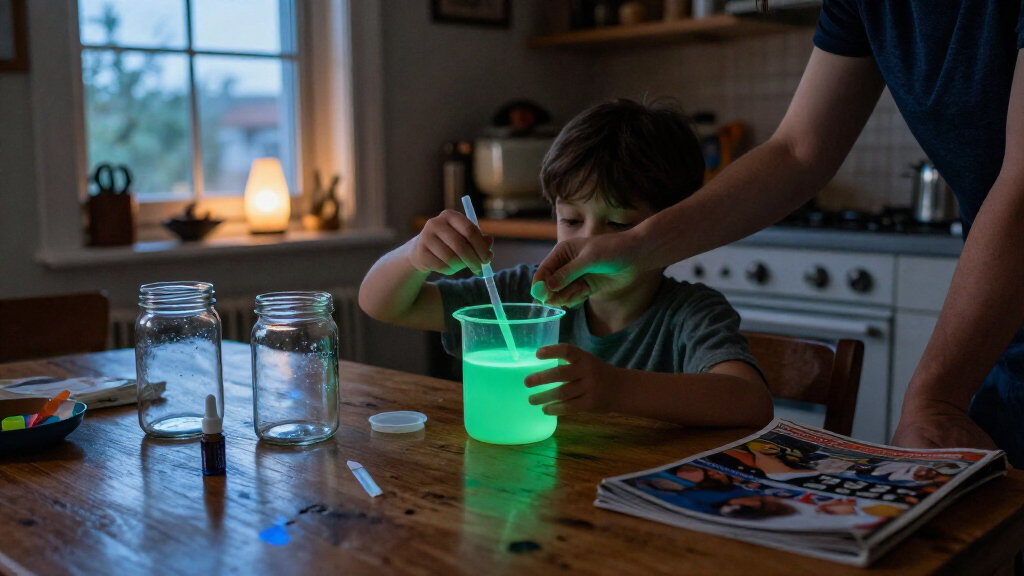
I compared the 11 kits by how directly they connect glow-in-the-dark effects to hands-on learning, how many distinct activities they offer, and whether the finished project gives children a reason to revisit what they made. I also weighed age fit, clarity of the activity format, likely setup and cleanup demands, and how well each kit’s theme suits a particular kind of learner. A larger activity count alone did not earn a higher position: a focused project can be a better choice when it is easier to complete or closely matches a child’s interests.
The ranking favors versatility and learning value for the top overall positions, then gives specialist kits credit for doing one job well. That is why an experiment lab or broad science set ranks ahead of a single-model project for general buyers, while the solar system, dinosaur, candy, and terrarium options remain strong choices for narrower interests. Product names and listed formats inform this comparison; I do not claim hands-on testing or assume that every kit has identical materials, instructions, or glow performance.
| glow in the dark science kit | Brand | Material |
|---|---|---|
| Fluorescent Rock Science Kit w | PIBEX | — |
| Thames & Kosmos Glow-in-the-Da | Thames & Kosmos | Plastic |
| National Geographic Jumbo Glow | — | — |
| National Geographic Glow-in-th | Blue Marble | Plastic, paper |
| Glow-in-the-Dark Science Exper | PW | Polyvinyl Alcohol (PVA) |
| Tasty Labs Groovy Glowing Cand | Thames & Kosmos | Plastic |
| Smartivity Glow Magic Science | Smartivity | MDF |
| National Geographic Glow-in-th | Blue Marble | — |
| National Geographic Glow-in-th | Blue Marble | Plastic |
| Blue Marble Glow-in-the-Dark B | Blue Marble | — |
| Creativity for Kids Grow ‘N Gl | — | — |
Factors to Consider When Choosing Glow In The Dark Science Kits
Before choosing, decide what you want the glow effect to add: a prompt for repeated experiments, a reason to build a model, or a fun reveal at the end of one activity. These kits vary more by project style and commitment than by the glow feature alone, so matching the format to the child often matters more than picking the kit with the biggest-sounding title.
Choose an activity format before comparing kit size
A kit with many experiments suits a child who likes trying several short activities, while a crystal, terrarium, or model project asks for more patience and follow-through. Activity counts can be misleading if some projects use similar steps or depend on shared supplies. Think about whether the child prefers to repeat and compare results or make one object to keep. A single-project kit is not automatically lesser value if it is the activity they will actually finish. For siblings, broad kits can offer more chances to take turns, but a shared project may work better when adult help is available. Match the format to attention span and interest rather than assuming bigger means better.
Check what the glow effect contributes
Glow can serve as part of an observation, or it can simply make the final item more exciting in a dark room. Look for a clear link between the activity and a science idea, such as material properties, light, growth, or the structure of a model. A UV flashlight, where included, may support demonstrations that rely on fluorescence, which is different from materials that glow after absorbing light. Do not assume every glowing product works the same way or that a kit includes all lighting accessories. If the child mainly wants a dramatic finished result, a themed build or craft may suit them better than a broad lab set. If learning is the priority, favor instructions that encourage questions and comparisons.
Match the challenge to the child and the adult’s role
Age labels are a starting point, not a promise that every child can complete every step independently. Reading, measuring, careful handling, and waiting for a result can make a kit harder than its headline age range suggests. Before buying, check whether the project likely calls for adult supervision, help with setup, or assistance interpreting instructions. A younger beginner often benefits from one clearly defined outcome rather than several loosely connected activities. Older children may want more room to make choices, repeat a process, or compare outcomes. The best fit is a kit that asks for just enough help to keep the activity engaging without turning it into an adult-led demonstration.
Plan for timing, setup, and cleanup
Not every science activity fits into one sitting. Growing crystals or tending a terrarium can involve waiting or ongoing care, while a bouncy-ball project or model may provide a more immediate finish. Consider where the child will work and whether the activity involves materials that need careful handling or a wipeable surface. A kit that looks simple on the box may still require preparation, sorting, or close supervision. Check the package details for included components and any household items needed before setting aside activity time. If the kit is meant for a party or a short gift-opening session, a project with a quicker finish may be a safer choice than a long-running experiment.
Decide whether a theme or versatility matters more
A child who is absorbed by dinosaurs, space, rocks, food science, or plants may get more from a specialist kit than from a general-purpose lab. The theme can help sustain attention, but it also narrows what the kit covers. A broad experiment set offers more variety if a child’s interests shift or if several children will share it. Avoid paying for breadth that will go unused, and avoid choosing a narrow theme solely because its glow effect sounds striking. Consider whether the project has replay value after the first reveal, such as opportunities to repeat, display, or discuss what happened. This balance helps distinguish a memorable interest-led gift from a kit intended for ongoing exploration.
Frequently Asked Questions
Which type of glow-in-the-dark science kit is best for a first-time experimenter?
For a first kit, prioritize a clear activity sequence and one satisfying result over the largest number of projects. A broad lab can be a good fit if the child enjoys trying different tasks, but a focused bouncy-ball or themed project may feel more manageable. Check the age guidance and whether an adult needs to handle setup or explain steps. It also helps to choose a subject the child already likes, since interest can carry them through instructions and waiting time. A simple project they complete is often a better start than a more ambitious kit they leave unfinished.
Are UV-fluorescent minerals the same as glow-in-the-dark materials?
No. Fluorescent minerals may appear bright under ultraviolet light, while many glow-in-the-dark materials absorb light and continue glowing after the light source is removed. That difference affects how the activity works: a UV flashlight can be central to seeing fluorescence, whereas an afterglow material needs to be charged by exposure to light. Check the kit description for the included light source and the kind of effect it demonstrates. If you want a glow that remains visible after switching off a lamp, do not assume a fluorescent specimen will provide that experience. The mineral kit is best understood as a light-and-material exploration rather than a conventional afterglow project.
Should I choose a multi-activity kit or a single-project kit?
Choose a multi-activity kit when the child likes variety, has time to revisit experiments, or will share the kit with siblings. A single-project option is a better match when the child has a specific interest or you want a more defined activity with a concrete result. More activities can mean more setup, more materials to track, and a greater chance that some projects go unused. A focused kit may offer less variety but make it easier to plan a complete activity. Think about the child’s usual play style and the occasion, not just the number of experiments listed.
What should I check before buying a kit that grows crystals or plants?
Check how long the project takes, whether it needs ongoing attention, and what supplies or supervision the instructions call for. Crystal growing and terrarium activities can be rewarding for children who enjoy watching a result develop, but they may not provide an instant finished project. Think about whether the child can wait between steps and whether there is a suitable place to leave the setup undisturbed. Also verify what the kit includes rather than assuming every container, growing material, or accessory is supplied. If the gift is for a child who prefers immediate results, a build or experiment with a shorter activity cycle may be a better fit.
Can I choose a kit based mainly on its theme, such as dinosaurs or space?
Yes, a strong theme can be a sensible way to choose, especially when the child already has a clear interest. The dinosaur dissection kit and solar system model make the glow effect part of a subject-led activity, rather than offering the same kind of broad experiment range as a lab kit. That focus can improve engagement, but it may limit replay value if interest fades after the project is complete. Consider whether the child wants to build, inspect, grow, or experiment, then use the theme as a tie-breaker. For a child with several interests or a group of children, a more versatile kit may offer a better fit.
Conclusion
For most families, I would start with the Thames & Kosmos Glow-in-the-Dark Science Lab as the best overall choice because it centers the experience on varied science activities. The National Geographic Mega Science Experiment Kit is my best value-style pick for buyers who want a broader activity mix, while the National Geographic Jumbo Crystal Growing Kit is the premium-style choice for a patient child who wants a longer project and a displayable result. For beginners, I would choose a focused, clearly themed activity such as the Blue Marble Bouncy Ball Kit rather than assume a larger kit will be easier. For specific interests, pick the dinosaur kit for a dissection-style activity, the solar system model for a space fan, the mineral kit for UV exploration, the candy lab for food-focused experiments, or the terrarium for a growing project. My final rule: choose the format the child will finish, then let the glow effect and theme settle the decision.