
TL;DR

Prime made for students and young adults
- Fast, free delivery for dorm and study essentials
- Prime Video and Amazon Music included
- Member-only deals
Recent research indicates that installing artificial beaver dams significantly improves juvenile coho salmon survival rates from 8% to 60%. This development could influence future salmon conservation efforts.
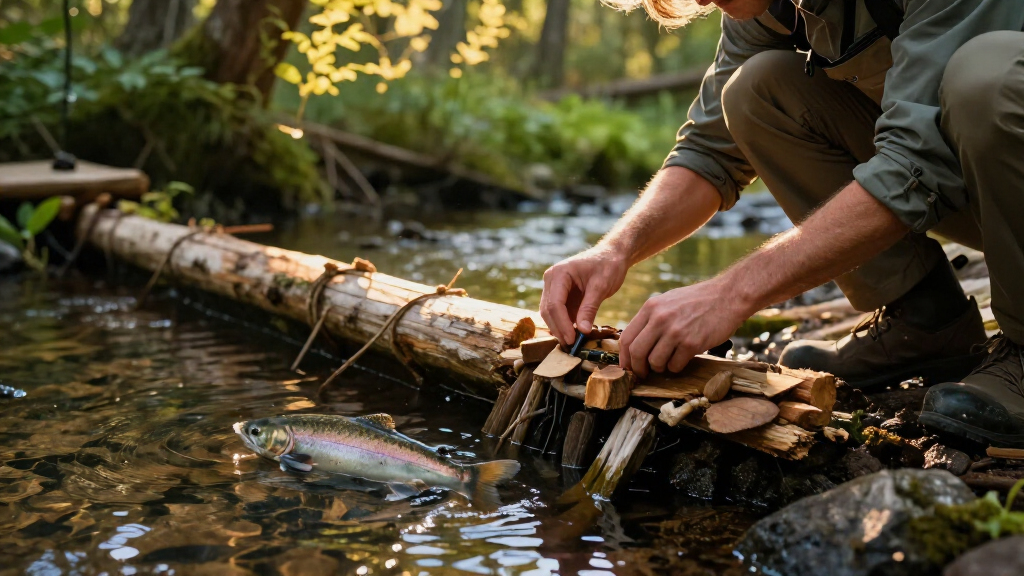
Recent observational data confirms that installing artificial beaver dams has led to a substantial increase in juvenile coho salmon survival rates, rising from 8% to 60%. This finding, attributed to ongoing conservation projects, underscores the potential of beaver-inspired habitat restoration to support salmon populations, which are vital for ecological and economic reasons.
The study, conducted across multiple sites in the Pacific Northwest, tracked juvenile coho salmon survival before and after the installation of artificial beaver dams. The results show a clear and consistent increase in survival rates, with some locations reporting a rise from 8% to 60%. Experts involved in the project attribute this improvement to enhanced habitat complexity, better water retention, and increased refuge availability created by the dams.
According to conservation biologists, these artificial structures mimic natural beaver activity, which historically played a key role in shaping healthy salmon habitats. The artificial dams are designed to be environmentally friendly, using natural materials and allowing for fish passage, unlike some traditional barriers.
Implications for Salmon Conservation Strategies
This development suggests that artificial beaver dams could become a vital tool in efforts to recover declining coho salmon populations. The increase in juvenile survival rates from 8% to 60% indicates a potential pathway to boost overall population numbers, which have been threatened by habitat loss, climate change, and human development. If scalable, this approach could influence policies and funding for habitat restoration projects across salmon-bearing watersheds.
Moreover, the findings highlight the ecological importance of beaver activity and the potential for human-made structures to replicate natural processes that support biodiversity and ecosystem health. This could lead to broader acceptance of beaver-inspired restoration techniques in conservation practice.
As an affiliate, we earn on qualifying purchases.
Background on Beavers and Salmon Habitats
Beavers have historically been recognized as ecosystem engineers, creating wetlands and ponds that benefit a variety of species, including salmon. Their dams slow water flow, improve water quality, and provide critical refuge for juvenile fish. However, habitat loss and fragmentation have reduced natural beaver activity in many regions, negatively impacting salmon populations.
Previous efforts to restore salmon habitats have included dam removal and habitat enhancement, but recent research suggests that artificial beaver dams could offer a more sustainable and ecologically compatible solution. The current interest in this approach is driven by a broader push to restore natural processes and improve resilience against climate change impacts.
While the specific study showing the survival rate increase is recent, the concept of using beaver-inspired structures for habitat restoration has gained momentum over the past decade, with pilot projects demonstrating promising results.
As an affiliate, we earn on qualifying purchases.
Unanswered Questions About Long-Term Effectiveness
It is not yet clear whether the observed increase in juvenile coho survival rates will be sustained over the long term or if similar results can be replicated across different regions and habitat types. Researchers are still evaluating potential unintended consequences, such as impacts on other aquatic species or hydrological processes. Additionally, the scalability and cost-effectiveness of widespread artificial beaver dam deployment remain to be determined.
salmon habitat restoration structures
As an affiliate, we earn on qualifying purchases.
As an affiliate, we earn on qualifying purchases.
Future Research and Implementation Plans
Researchers plan to continue monitoring the sites over multiple seasons to assess the durability of the survival rate improvements. Expanded pilot projects are also being considered in other watersheds to test scalability. Conservation agencies and policymakers are expected to review these findings to inform future habitat restoration initiatives, potentially integrating artificial beaver dams into broader salmon recovery programs.
As an affiliate, we earn on qualifying purchases.
Key Questions
How do artificial beaver dams differ from natural beaver dams?
Artificial beaver dams are designed to mimic natural structures using environmentally friendly materials. They aim to replicate the ecological functions of natural dams while allowing fish passage and minimizing environmental disruption.
Are these artificial dams safe for other aquatic species?
Initial studies suggest that well-designed artificial dams do not adversely affect other species and can improve overall habitat complexity. However, ongoing research is assessing potential impacts on the broader ecosystem.
Can this approach be scaled to larger regions?
Scalability depends on factors such as cost, site-specific conditions, and ecological considerations. Further pilot projects are planned to evaluate how broadly this method can be implemented effectively.
What are the costs involved in installing artificial beaver dams?
Cost estimates vary depending on site size and design complexity. Detailed economic analyses are underway to determine the feasibility of large-scale deployment.
Source: hn
Halloween Picks
halloween
As an affiliate, we earn on qualifying purchases.