
TL;DR

Prime made for students and young adults
- Fast, free delivery for dorm and study essentials
- Prime Video and Amazon Music included
- Member-only deals
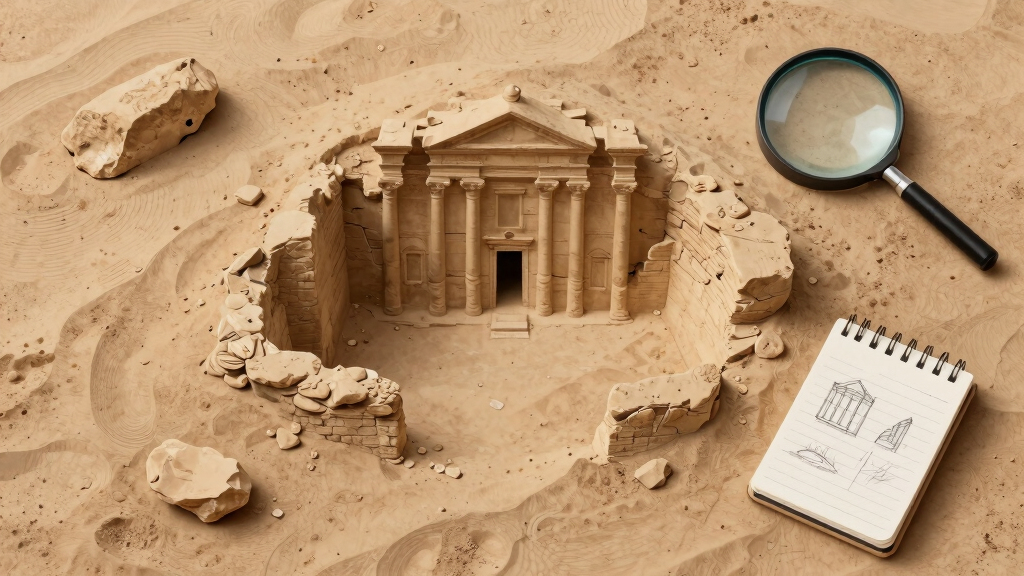
Archaeologists have uncovered a lost city beneath Egypt’s desert, featuring an ancient church dating back to early Christianity. The discovery sheds light on historical settlements and religious practices.
Archaeologists have confirmed the discovery of a lost city beneath Egypt’s desert, which includes the remains of an ancient church dating back to early Christianity. This breakthrough was announced by the Egyptian Ministry of Antiquities on March 15, 2026, and is considered one of the most significant archaeological finds in recent years, offering new insights into early Christian settlements in North Africa.
The site was uncovered during a recent excavation in the Western Desert, where a team of Egyptian and international archaeologists identified extensive structures buried beneath layers of sand and sediment. The discovery includes the remains of a church built with stone and brick, featuring Christian iconography and inscriptions that date it to approximately the 4th or 5th century AD. The city itself appears to have been a thriving settlement, with evidence of domestic buildings, workshops, and possibly a marketplace, all preserved beneath the desert surface.
According to Dr. Ahmed El-Sayed, lead archaeologist on the project, the site’s architecture and artifacts suggest it was an important religious and commercial hub during early Christianity’s spread in Egypt. The find is notable for its well-preserved state and the clarity of the Christian symbols, which provide valuable material for understanding religious practices during that era. The discovery was made using ground-penetrating radar and targeted excavation techniques, which revealed the extensive urban layout before any major surface disturbance.
Why This Discovery Reshapes Early Christian History
This discovery is significant because it offers tangible evidence of early Christian communities in Egypt, a region historically pivotal to Christianity’s development. The well-preserved church and city structures provide new material for scholars studying religious architecture, community life, and the spread of Christianity in North Africa. It may also shed light on the interactions between Christian settlers and other populations in the region during the late Roman Empire.
Furthermore, the find could influence understanding of the geographic extent of early Christian influence and the socio-economic networks that supported these communities. The site’s artifacts might also help clarify the timeline of Christianization in Egypt and the role of local settlements in religious and cultural exchanges.
ground penetrating radar for archaeology
As an affiliate, we earn on qualifying purchases.
As an affiliate, we earn on qualifying purchases.
Previous Discoveries and the Significance of Desert Excavations
Egypt has been a focal point for archaeological discoveries related to ancient civilizations, including the Pharaonic, Greco-Roman, and early Christian periods. Past excavations have uncovered temples, tombs, and inscriptions that have shaped understanding of Egypt’s historical timeline. However, discoveries of urban settlements buried beneath desert sands remain rare and highly valuable.
Recent advancements in remote sensing technologies, such as ground-penetrating radar, have enabled archaeologists to identify buried structures without extensive surface disturbance. The current find builds on this progress, revealing a previously unknown city that likely played a role in regional trade and religious life during the late antique period.
“This site provides a rare glimpse into the early Christian community in Egypt, with remarkably preserved structures and artifacts that deepen our understanding of their way of life.”
— Dr. Ahmed El-Sayed
As an affiliate, we earn on qualifying purchases.
Remaining Questions About the Site’s Full Extent and Usage
While the initial findings confirm the presence of a Christian church and urban structures, many details remain unclear. It is not yet confirmed how large the city was, what specific functions it served, or how it connected to other known settlements. Further excavations and research are needed to determine the full scope of the site and its historical context.
As an affiliate, we earn on qualifying purchases.
Next Steps in Excavation and Research
Archaeologists plan to conduct more extensive excavations, including detailed artifact analysis and dating, to better understand the city’s history and its role in early Christianity. Additional surveys using remote sensing will aim to map the entire site and identify other buried structures. The team also intends to collaborate with international experts to interpret findings and publish detailed reports in the coming months.
As an affiliate, we earn on qualifying purchases.
Key Questions
How old is the city and the church?
The church is estimated to date back to approximately the 4th or 5th century AD, but further dating is ongoing to confirm the exact age of the city and structures.
What makes this discovery unique?
The site’s well-preserved state, extensive urban layout, and Christian artifacts make it a rare and valuable window into early Christian life in Egypt.
Will the site be open to the public?
It is too early to determine if the site will be accessible to visitors. Conservation and further research are the immediate priorities.
What does this discovery tell us about early Christianity?
It provides concrete evidence of Christian communities in Egypt, their architecture, and their way of life during the late Roman Empire period.
Source: hn
Halloween Picks
halloween
As an affiliate, we earn on qualifying purchases.