

For most students, National Geographic Kids Science Encyclopedia is the best overall starting point: its broad range of topics makes it useful for both school questions and curiosity-led reading. Knowledge Encyclopedia: Science!, 2nd Edition is a strong alternative for students who learn best from detailed visuals, while Everything You Need to Know About Science Homework focuses more directly on upper-elementary assignments. The main tradeoff is breadth versus depth: general encyclopedias cover many fields, but anatomy, microbiology, biology, and Earth science guides concentrate on one subject. Age, reading level, and whether a student needs explanations, quick facts, or practice also change which book makes sense. Continue reading for a comparison of all 14 picks and guidance on matching one to a student’s needs.

Prime made for students and young adults
- Fast, free delivery for dorm and study essentials
- Prime Video and Amazon Music included
- Member-only deals
Key Takeaways
- Broad, illustrated coverage leads the roundup: National Geographic Kids Science Encyclopedia and Knowledge Encyclopedia: Science!, 2nd Edition serve students who want one book spanning several science fields.
- Visual detail is not the same as homework support: The Knowledge Encyclopedia titles emphasize illustrated explanation, while Everything You Need to Know About Science Homework is aimed at Grades 4–6 assignments.
- Specialist guides trade breadth for focused lookup: The QuickStudy microbiology, biology, and Earth science guides, plus The Pocket Atlas of Human Anatomy, suit students with a particular subject need rather than readers seeking a general reference.
- Age fit separates beginner choices: The Illustrated Elementary Science Dictionary is aimed at ages 7–10, while the Grade 6 Spectrum workbook is a more structured practice option than an open-ended reference.
- Format matters as much as topic: A six-book collection offers variety across subjects, a laminated guide favors quick consultation, and a large visual encyclopedia is better suited to sustained browsing than portable study.
| National Geographic Kids Science Encyclopedia: Atom Smashing, Food Chemistry, Animals, Space, and More! |  | Best Overall for Curious Kids | Format: Science encyclopedia | Audience: Children | Subjects: Chemistry, biology, space, animals, and other science topics | VIEW LATEST PRICE | See Our Full Breakdown |
| Microbiology: A QuickStudy Laminated Reference Guide |  | Best Compact Subject Review | Format: Laminated reference guide | Subject: Microbiology | Intended use: Quick reference and study aid | VIEW LATEST PRICE | See Our Full Breakdown |
| The Pocket Atlas of Human Anatomy, Revised Edition |  | Best for Portable Anatomy Study | Format: Pocket anatomy atlas | Edition: Revised edition | Subject: Human anatomy | VIEW LATEST PRICE | See Our Full Breakdown |
| Knowledge Encyclopedia: Science for Children |  | Best for Accessible First Concepts | Format: Children’s science encyclopedia | Audience: Children; exact age range not specified | Coverage: Various science topics | VIEW LATEST PRICE | See Our Full Breakdown |
| Knowledge Encyclopedia Human Body! Human Anatomy as You’ve Never Seen It Before |  | Best Illustrated Human Body Reference | Format: Human anatomy encyclopedia | Subject: Human body and anatomy | Content: Detailed illustrations, explanations, and engaging facts | VIEW LATEST PRICE | See Our Full Breakdown |
| Science Knowledge Encyclopedia for Children: Collection of 6 Books (Box Set) |  | Best for Broad Exploration | Format: Box set | Number of books: 6 | Subject: Science | VIEW LATEST PRICE | See Our Full Breakdown |
| Illustrated Elementary Science Dictionary: An Essential Reference for Kids (Ages 7-10) |  | Best for Quick Definitions | Format: Illustrated dictionary | Subject: Science | Intended age range: 7–10 | VIEW LATEST PRICE | See Our Full Breakdown |
| Knowledge Encyclopedia: Science!, 2nd Edition |  | Best for General Science Browsing | Format: Encyclopedia | Subject: Science | Edition: 2nd Edition | VIEW LATEST PRICE | See Our Full Breakdown |
| Earth Science: A QuickStudy Laminated Reference Guide |  | Best for Portable Earth Science Review | Format: Laminated reference guide | Series: QuickStudy | Subject: Earth science | VIEW LATEST PRICE | See Our Full Breakdown |
| Spectrum Grade 6 Science Workbook |  | Best for Grade 6 Practice | Format: Workbook | Grade level: Grade 6 | Subject coverage: Natural, earth, and life sciences | VIEW LATEST PRICE | See Our Full Breakdown |
| The Elements Book: A Visual Periodic Table Encyclopedia for Kids |  | Best for Visual Element Learning | Format: Book | Series: DK Our World in Pictures | Topic: Chemical elements and the periodic table | VIEW LATEST PRICE | See Our Full Breakdown |
| Everything You Need to Know About Science Homework: A Desk Reference for Students and Parents, Grades 4–6 |  | Best for Upper-Elementary Homework Support | Format: Desk reference | Grade level: 4th–6th grades | Intended users: Students and parents | VIEW LATEST PRICE | See Our Full Breakdown |
| Science Book: Everything You Need to Know About the World and How It Works |  | Best for Broad Science Exploration | Format: Book | Topic: Science | Scope: The world and how it works | VIEW LATEST PRICE | See Our Full Breakdown |
| Biology: QuickStudy Laminated Reference Guide | 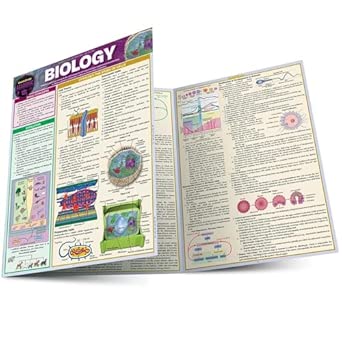 | Best Compact Biology Quick Reference | Format: Laminated reference guide | Series: QuickStudy | Topic: Biology | VIEW LATEST PRICE | See Our Full Breakdown |
| science reference books for student | Format | Audience | Subject |
|---|---|---|---|
| National Geographic Kids Scien | Science encyclopedia | Children | — |
| Microbiology: A QuickStudy Lam | Laminated reference guide | — | Microbiology |
| The Pocket Atlas of Human Anat | Pocket anatomy atlas | — | Human anatomy |
| Knowledge Encyclopedia: Scienc | Children’s science encyclopedia | Children; exact age range not specified | — |
| Knowledge Encyclopedia Human B | Human anatomy encyclopedia | Readers of varied ages interested in human biology | Human body and anatomy |
| Science Knowledge Encyclopedia | Box set | — | Science |
| Illustrated Elementary Science | Illustrated dictionary | Children | Science |
| Knowledge Encyclopedia: Scienc | Encyclopedia | — | Science |
| Earth Science: A QuickStudy La | Laminated reference guide | — | Earth science |
| Spectrum Grade 6 Science Workb | Workbook | — | — |
| The Elements Book: A Visual Pe | Book | Kids | — |
| Everything You Need to Know Ab | Desk reference | — | — |
| Science Book: Everything You N | Book | Not specified in supplied product data | — |
| Biology: QuickStudy Laminated | Laminated reference guide | Not specified in supplied product data | — |
More Details on Our Top Picks
National Geographic Kids Science Encyclopedia: Atom Smashing, Food Chemistry, Animals, Space, and More!
Broad subject coverage makes this the most flexible starting point here for children who want to browse across science rather than focus on one class topic. Its mix of chemistry, biology, space, and animals, paired with colorful illustrations and engaging facts, can help young readers connect science with things they already find interesting. Compared with Knowledge Encyclopedia: Science for Children, this title’s subject-spanning format also suits kids who like jumping between topics. It is less useful as a detailed study aid: explanations are not pitched for older students, and the available details do not establish textbook-style depth or supplementary resources. I’d choose it for curiosity-led reading and early reference, not as a stand-in for a course text or a focused guide such as Microbiology: A QuickStudy Laminated Reference Guide.
Pros:- Covers several major science areas, supporting broad browsing
- Colorful illustrations make concepts more approachable for young readers
- Engaging facts can encourage independent exploration
- More suited to wide-ranging discovery than a single-topic guide
Cons:- Explanations lack the depth older students may need for coursework
- Broad coverage may be less useful than a focused reference when studying one subject
- The supplied product details do not specify grade range or supplementary learning resources
Best for: Elementary-age readers who want an illustrated reference for exploring several branches of science at home or alongside introductory schoolwork.
Not ideal for: Middle- and high-school students who need sustained explanations, advanced terminology, or detailed help with a specific science course.
- Format:Science encyclopedia
- Audience:Children
- Subjects:Chemistry, biology, space, animals, and other science topics
- Content style:Educational facts and explanations
- Visual approach:Colorful illustrations
- Depth:Introductory; limited detail for older students
Our verdict“Choose this for a young learner who wants an illustrated, all-around introduction to science rather than a detailed course reference.”
Microbiology: A QuickStudy Laminated Reference Guide
For a student who needs a fast reminder of microbiology concepts, this guide favors concise coverage and portability over extended teaching. Its laminated format is suited to repeated handling, while the focused subject scope makes it easier to consult during a study session than a broad children’s encyclopedia such as National Geographic Kids Science Encyclopedia. That focus is also its main limitation: the supplied description does not identify detailed explanations, practice material, or additional resources, so it is better for review than for learning microbiology from scratch. Compared with The Pocket Atlas of Human Anatomy, Revised Edition, it serves a different need—quick topic reference rather than visual anatomy study. I’d pair it with class notes or a textbook when concepts need more explanation.
Pros:- Compact format is easy to carry between class and study locations
- Laminated construction is suited to frequent handling
- Focused on microbiology rather than general science
- Concise layout can support quick review
Cons:- Limited depth makes it a weak substitute for a textbook
- No additional learning resources are specified
- A narrow subject focus offers little help with other science topics
Best for: Students in an introductory microbiology course who want a portable, durable aid for checking key concepts during review.
Not ideal for: Learners studying microbiology for the first time or advanced students who need detailed explanations, examples, or practice resources.
- Format:Laminated reference guide
- Subject:Microbiology
- Intended use:Quick reference and study aid
- Portability:Compact
- Construction:Laminated
- Coverage:Concise overview of essential microbiology concepts
Our verdict“Pick this laminated guide for portable microbiology review, but use a fuller course resource to learn difficult concepts.”
The Pocket Atlas of Human Anatomy, Revised Edition
This atlas is the most practical choice in this group for learners who need to keep human anatomy illustrations close at hand. Its compact size and concise information favor quick visual reference, making it a better match for anatomy review than the broad, child-focused National Geographic Kids Science Encyclopedia. The tradeoff is that a pocket format leaves less room for detailed textual descriptions and advanced coverage. That makes it less suitable as a sole anatomy resource, particularly for students who need fuller explanations of structures or systems. Compared with Knowledge Encyclopedia Human Body!, this revised atlas prioritizes portability and concise consultation; the larger body-focused encyclopedia is the stronger fit for readers seeking more expansive, accessible exploration. I’d select this for supplementary study in anatomy-related fields.
Pros:- Compact size makes it convenient to carry and consult
- Detailed illustrations support visual understanding of anatomy
- Concise information works well for quick checks
- Relevant to learners in several anatomy-related fields
Cons:- Limited text may leave structures and concepts underexplained
- May not cover advanced anatomical topics in sufficient depth
- Works best alongside supplementary study materials
Best for: Physical therapy, medicine, sports, and bodywork students who want a portable visual aid to supplement classes or larger anatomy texts.
Not ideal for: Students who need comprehensive anatomical descriptions, advanced coverage, or a single resource for learning anatomy from the ground up.
- Format:Pocket anatomy atlas
- Edition:Revised edition
- Subject:Human anatomy
- Content:Illustrations and concise information
- Design:Compact and portable
- Intended audience:Students and professionals in physical therapy, medicine, sports, and bodywork
Our verdict“Choose this atlas as a portable visual companion, not as your only resource for anatomy coursework.”
Knowledge Encyclopedia: Science for Children
This children’s encyclopedia is aimed at making science ideas approachable through simple explanations and colorful visuals. It makes sense for younger readers who need concepts introduced plainly, rather than the concise subject review found in Microbiology: A QuickStudy Laminated Reference Guide or the anatomy-specific focus of The Pocket Atlas of Human Anatomy, Revised Edition. Its strength is accessibility, not technical detail: the description says it simplifies complex topics, but does not specify an age range or the depth of coverage. That leaves families and teachers with less guidance on matching it to a particular grade. Compared with National Geographic Kids Science Encyclopedia, it shares a broad, child-friendly purpose; the choice between them may come down to which presentation best fits a young reader, since detailed distinctions are not provided.
Pros:- Accessible explanations can help young readers approach unfamiliar concepts
- Colorful illustrations support visual engagement
- Covers a range of science topics
- Designed to simplify complex ideas for children
Cons:- Does not provide the technical depth needed for advanced study
- No specific age range is stated in the supplied details
- The available description does not establish how its coverage differs from other children’s science encyclopedias
Best for: Parents and elementary teachers seeking an illustrated science reference that introduces broad concepts in child-friendly language.
Not ideal for: Older students who need technical vocabulary, detailed explanations, or explicit alignment to a grade-level science curriculum.
- Format:Children’s science encyclopedia
- Audience:Children; exact age range not specified
- Coverage:Various science topics
- Explanation style:Accessible explanations that simplify complex concepts
- Visual approach:Colorful illustrations
- Technical depth:Introductory; limited technical detail
Our verdict“Choose this for a young learner who benefits from simple explanations and visuals, rather than detailed science instruction.”
Knowledge Encyclopedia Human Body! Human Anatomy as You’ve Never Seen It Before
Readers focused on how the body works may get more from this title than from a general science encyclopedia. Its detailed illustrations and accessible explanations are intended to make anatomy engaging without limiting the subject to quick-reference facts. Compared with The Pocket Atlas of Human Anatomy, Revised Edition, this book is better suited to sustained visual exploration, while the pocket atlas is easier to carry and consult briefly. The broader treatment has a tradeoff: the supplied description notes that the detail may overwhelm casual readers, and it does not establish advanced course-level coverage. For students, that makes it a useful companion for building interest and understanding, but not necessarily a replacement for assigned anatomy texts. Unlike the QuickStudy guides, it also centers on one larger topic rather than compact study prompts.
Pros:- Detailed illustrations provide a strong visual route into anatomy
- Accessible explanations make complex body concepts approachable
- Focused human-body coverage suits readers with a specific interest
- Offers a more expansive anatomy experience than a pocket reference
Cons:- The level of detail may not suit readers seeking only a quick overview
- The supplied description does not establish advanced course-level coverage
- A single-topic focus is less useful for students seeking broad science coverage
Best for: Middle-grade and older readers interested in learning body systems through detailed illustrations and accessible explanations.
Not ideal for: Casual readers seeking a very brief overview, or advanced anatomy students who require comprehensive technical material and course-specific detail.
- Format:Human anatomy encyclopedia
- Subject:Human body and anatomy
- Content:Detailed illustrations, explanations, and engaging facts
- Explanation style:Accessible presentation of complex anatomy
- Audience:Readers of varied ages interested in human biology
- Depth:Detailed general-interest coverage; advanced course depth not specified
Our verdict“Choose this for an engaging, illustration-led study of the human body, and choose the pocket atlas when portability matters more.”
Science Knowledge Encyclopedia for Children: Collection of 6 Books (Box Set)
For young students who prefer sampling many science topics over consulting one reference book, this six-book set offers the broadest format in this group. Its collection approach can give curious readers several entry points for independent browsing, while the child-focused presentation is intended to make science approachable. Compared with the Illustrated Elementary Science Dictionary, this set is better suited to exploration than to looking up a specific term quickly; the dictionary has a clearer reference function and a stated age range. The tradeoff is a lack of detail in the available description: it does not identify the six subjects, reading level, or how the books are organized. I would choose it for a child who likes browsing, but not as a targeted aid for a particular class unit.
Pros:- Six books offer more than one format or entry point for exploring science
- Designed to introduce scientific concepts to children
- May encourage independent browsing and curiosity
Cons:- The listed information does not name the subjects covered in each book
- No age range or reading-level guidance is provided
- The description does not establish how useful the set is for specific school assignments
Best for: Young science enthusiasts who want several books to browse at home and are not shopping for one specific subject.
Not ideal for: Students who need a clearly leveled reference for a particular grade or a quick, reliable way to find definitions, since topics and age range are unspecified.
- Format:Box set
- Number of books:6
- Subject:Science
- Intended audience:Children
- Stated use:Introduction to scientific concepts
- Age range:Not specified
Our verdict“Choose this set for a young browser who wants a multi-book introduction to science, not a precisely targeted study reference.”
Illustrated Elementary Science Dictionary: An Essential Reference for Kids (Ages 7-10)
Students aged 7 to 10 who get stuck on science vocabulary have a more direct match here than in the six-book Science Knowledge Encyclopedia for Children set. This title is explicitly a science dictionary, and its illustrations are meant to make definitions easier for young readers to grasp. That focused lookup role can support homework and reinforce classroom terms without requiring a child to read a longer topic overview. The tradeoff is scope: the description points to basic science concepts, not extended explanations, experiments, or a full course of study. Compared with the broader Knowledge Encyclopedia: Science!, 2nd Edition, this is the more age-specific vocabulary aid, but the available details say less about its subject coverage and reference features.
Pros:- States a clear intended age range of 7 to 10
- Illustrations can help young readers connect terms with concepts
- Dictionary format suits quick vocabulary lookups
- Designed to build confidence with elementary science topics
Cons:- Coverage is described as basic rather than advanced
- The available description does not list included terms or science branches
- No specific information is given about layout or depth of definitions
Best for: Parents and teachers seeking an illustrated vocabulary reference for elementary students aged 7 to 10 who need help understanding science terms.
Not ideal for: Older students or learners who need detailed explanations, advanced concepts, or a broad reference for sustained research.
- Format:Illustrated dictionary
- Subject:Science
- Intended age range:7–10
- Audience:Children
- Content focus:Definitions of key science concepts
- Stated purpose:Support science study and build confidence
Our verdict“Pick this for an illustrated, age-targeted vocabulary reference; choose a broader encyclopedia for longer explanations and topic browsing.”
Knowledge Encyclopedia: Science!, 2nd Edition
Knowledge Encyclopedia: Science!, 2nd Edition is the clearest fit here for students seeking a general science encyclopedia rather than a workbook, dictionary, or compact review aid. Its encyclopedia format suggests a browse-and-discover role, while the identified second edition distinguishes it from the more narrowly defined Illustrated Elementary Science Dictionary, which targets ages 7 to 10 and focuses on terms. The limitation is that the supplied product information gives no account of topics, age level, illustrations, or depth. I would not assume it covers a particular school unit or suits a specific grade without checking those details. Compared with the Spectrum Grade 6 Science Workbook, this is positioned as a reference for reading rather than structured practice, so it may be less useful for students who need exercises.
Pros:- General science encyclopedia format supports topic browsing
- Second edition is identified in the product information
- A reference-book alternative to the practice-focused Spectrum Grade 6 Science Workbook
Cons:- The supplied description does not specify topics or subject coverage
- No age range or reading level is provided
- No details establish whether it includes illustrations, activities, or in-depth explanations
Best for: Students and families looking for a general science encyclopedia to browse alongside schoolwork, after confirming its reading level suits the student.
Not ideal for: Sixth graders seeking guided exercises or buyers who need verified coverage of a specific science topic or grade-level curriculum.
- Format:Encyclopedia
- Subject:Science
- Edition:2nd Edition
- Intended audience:Not specified
- Age range:Not specified
- Topic coverage:Not specified in supplied description
Our verdict“Consider this for broad science browsing if its contents and reading level match the student, but choose a specified workbook for structured practice.”
Earth Science: A QuickStudy Laminated Reference Guide
For a student who needs a compact reminder of earth science concepts, this laminated guide is more practical than a full-size reference to carry between class and home. Its concise explanations and charts are intended for quick review, and the durable format suits repeated handling. That focus also defines its limit: it is not a substitute for a textbook or an in-depth explanation of a difficult topic. Compared with the broader Knowledge Encyclopedia: Science!, 2nd Edition, this guide trades subject range for a narrower earth science focus and faster scanning. It also differs from the Spectrum Grade 6 Science Workbook: the QuickStudy guide supports recall, while the workbook is designed to reinforce concepts through activities. I would use it as a supplement, not a student’s sole source.
Pros:- Compact format is easy to carry for class or study sessions
- Laminated surface is designed for durability
- Concise information and charts support quick review
- Focused subject scope can help with earth science revision
Cons:- Limited detail makes it unsuitable as a standalone textbook
- Covers earth science rather than a broad range of science subjects
- Does not provide the research activities described for the Spectrum Grade 6 Science Workbook
Best for: Students studying earth science who want a durable, portable sheet-style reference for quick review of key concepts and charts.
Not ideal for: Learners who need a full textbook, detailed explanations, practice activities, or coverage across biology and other science branches.
- Format:Laminated reference guide
- Series:QuickStudy
- Subject:Earth science
- Intended audience:Students and enthusiasts
- Content style:Concise overview
- Visual aids:Charts
- Stated use:Quick review
Our verdict“Choose this as a durable earth science refresher, not as a replacement for a textbook or practice workbook.”
Spectrum Grade 6 Science Workbook
Unlike the encyclopedia-style titles in this roundup, the Spectrum Grade 6 Science Workbook is built around practice for a defined school level. Its stated coverage spans natural, earth, and life sciences, while research activities give students a way to work with concepts rather than only read about them. That makes it a stronger choice for classroom reinforcement or homeschool assignments than the compact Earth Science: A QuickStudy Laminated Reference Guide, which is aimed at quick review and covers one branch. The tradeoff is that a workbook serves a different need from a browsable reference: students looking for quick definitions or broad, illustrated science reading may prefer the Illustrated Elementary Science Dictionary or an encyclopedia. The supplied description does not specify the number of activities or how closely the content maps to a particular curriculum.
Pros:- Clearly identified for Grade 6 students
- Covers natural, earth, and life sciences
- Includes research activities to reinforce concepts and skills
- Suitable for classroom and homeschool use
Cons:- Workbook practice is less suited to quick fact lookup than a dictionary or guide
- The description does not specify the number or format of activities
- No curriculum alignment details are provided
Best for: Grade 6 students, parents, and homeschool educators seeking structured practice and research activities across several science branches.
Not ideal for: Students who need a portable quick-reference guide, a dictionary for vocabulary lookups, or an encyclopedia for open-ended browsing.
- Format:Workbook
- Grade level:Grade 6
- Subject coverage:Natural, earth, and life sciences
- Activities:Scientific research activities
- Stated purpose:Reinforce science concepts and skills
- Use settings:Classroom or homeschool
Our verdict“Choose this for Grade 6 science practice across multiple subject areas; choose a guide or encyclopedia for quick reference and browsing.”
The Elements Book: A Visual Periodic Table Encyclopedia for Kids
For students curious about chemistry, this book makes the elements and the periodic table its clear focus. Its visual encyclopedia format suits children who learn better from pictures than from a text-heavy reference, while the DK Our World in Pictures series framing gives it a kid-oriented role distinct from the broader Science Book: Everything You Need to Know About the World and How It Works. That narrower scope is also its main tradeoff: students seeking a reference across biology, physics, and earth science will need another book. The supplied details do not specify the depth of explanations or whether it supports a particular grade or curriculum, so I would treat it as an engaging introduction rather than a complete chemistry course. Compared with the Illustrated Elementary Science Dictionary, this is the more focused choice for exploring elements, not general science vocabulary.
Pros:- Visual approach can make the elements more approachable for young learners.
- Focuses specifically on chemical elements and the periodic table.
- Designed for children rather than an adult technical audience.
Cons:- Narrow chemistry scope leaves other science subjects uncovered.
- Provided product details do not establish the depth of explanations or curriculum fit.
Best for: Children who want a picture-led introduction to chemical elements and the periodic table.
Not ideal for: Students looking for a broad science reference, detailed chemistry instruction, or confirmed grade-level curriculum coverage.
- Format:Book
- Series:DK Our World in Pictures
- Topic:Chemical elements and the periodic table
- Audience:Kids
- ASIN:1465456600
- Presentation:Visual encyclopedia
Our verdict“Choose this for a child who wants an illustrated starting point on the elements, not a general-purpose science reference.”
Everything You Need to Know About Science Homework: A Desk Reference for Students and Parents, Grades 4–6
This title has the most explicit school-age targeting in this group: it is a desk reference for grades 4–6, written for students and parents together. That makes it a more direct match for homework support than the child-focused but topic-specific The Elements Book, which concentrates on the periodic table. The limitation is that the supplied product information does not identify its science topics, explanations, or reference features. I can’t tell from those details whether it covers the subjects a particular class is studying, so buyers should check the book’s contents before relying on it for a specific assignment. Compared with the broad-scope Science Book, its stated grade range and parent-and-student audience offer clearer guidance on intended use, but not on the breadth or depth of its material.
Pros:- Names a specific target range: grades 4–6.
- Intended for both students and parents, supporting shared homework use.
- Desk-reference positioning suits keeping a science resource available for assignments.
Cons:- Provided description does not identify the science topics covered.
- No supplied details establish the depth, organization, or specific homework features.
Best for: Parents and students in grades 4–6 seeking a shared desk reference for general science homework.
Not ideal for: Families who need a confirmed topic such as biology or earth science, or who want detailed contents information before choosing.
- Format:Desk reference
- Grade level:4th–6th grades
- Intended users:Students and parents
- Topic:Science homework
- ASIN:B00OJE4TBE
- Use:Homework reference
Our verdict“Consider it for grades 4–6 homework support if the contents match the student’s class topics.”
Science Book: Everything You Need to Know About the World and How It Works
Broad subject coverage is the clearest reason to choose this reference: its title frames science around the world and how it works, rather than one school subject. That makes it a wider-ranging option than The Elements Book, which focuses on chemical elements, and a possible fit for students who want to browse across science topics. The product details supplied here, however, give no age range, topic list, visual approach, or level of detail. That uncertainty matters for student buyers, since a broad title alone does not show whether the explanations suit a particular grade or assignment. Unlike the grades 4–6 focus of Everything You Need to Know About Science Homework, this book has no stated school-level positioning. I’d favor it for exploratory reading, while checking its contents before choosing it as a curriculum companion.
Pros:- Broad science framing may suit readers with interests across multiple subjects.
- Presents itself as a reference about the world and how it works.
- Offers a wider stated scope than a single-topic guide such as The Elements Book.
Cons:- Provided data does not list the topics or explain how broad the coverage is.
- No audience or grade level is specified, making student fit harder to judge.
- No details are supplied about format beyond being a book.
Best for: Students who want a general science book for browsing across ideas about the world and how it works.
Not ideal for: Buyers seeking a verified grade-level match, specific subject coverage, or confirmed homework-reference features.
- Format:Book
- Topic:Science
- Scope:The world and how it works
- ASIN:1426208081
- Audience:Not specified in supplied product data
- Subject detail:Not specified in supplied product data
Our verdict“Pick this for broad science browsing, but verify its contents and level before using it for schoolwork.”
Biology: QuickStudy Laminated Reference Guide
Focused biology reference is the advantage here: this is a laminated QuickStudy guide, rather than a broad reading book like Science Book: Everything You Need to Know About the World and How It Works. That format may suit students who want a subject-specific reference they can consult alongside biology study. Lamination distinguishes it from the book-format options, but the supplied details do not state what biology topics it includes, how much content it carries, or what grade level it targets. I would not assume it covers a full course or replaces a textbook. Compared with the Microbiology: A QuickStudy Laminated Reference Guide, this title is the broader biology-labeled option based on its name, while the other is explicitly limited to microbiology. Its compact-reference role is useful, but buyers should check the guide’s coverage against their class.
Pros:- Biology focus is more targeted than a general science book.
- Laminated format distinguishes it from standard book-format references.
- QuickStudy branding signals a reference-guide format rather than a long-form book.
Cons:- Provided details do not list the biology topics covered.
- No grade level or course alignment is specified.
- A reference guide should not be assumed to replace fuller instruction.
Best for: Biology students who want a laminated, subject-specific reference guide to consult during study.
Not ideal for: Students who need a full biology textbook, broad science coverage, or confirmed alignment with a particular course.
- Format:Laminated reference guide
- Series:QuickStudy
- Topic:Biology
- ASIN:1423219538
- Presentation:Laminated
- Audience:Not specified in supplied product data
Our verdict“Choose this as a compact biology companion when its specific coverage matches the student’s coursework.”

How We Picked
I ranked these science reference books for students by how well each format and scope match common student tasks: understanding a new idea, checking a definition, researching a topic, preparing for class, or practicing skills. I weighed age and reading-level cues, breadth of subject coverage, visual support, ease of lookup, and whether the book functions as a reference, a homework aid, an atlas, or a workbook. A title with broad coverage ranks ahead of a narrow guide for general student use, while specialist books remain strong choices when their subject matches the learner’s current course.
The order favors versatility and student usability over sheer size or the number of topics. Illustrated encyclopedias rise when they make varied science subjects approachable; focused references rank higher for targeted lookup than for all-purpose use. I also accounted for tradeoffs: a workbook can provide practice but is less useful for open research, and a compact laminated guide can be easy to consult but covers less ground than a full book. The ranking reflects the intended audience and likely study role of each title, not a claim that one format suits every student.
| science reference books for student | Audience | Subject |
|---|---|---|
| National Geographic Kids Scien | Children | — |
| Microbiology: A QuickStudy Lam | — | Microbiology |
| The Pocket Atlas of Human Anat | — | Human anatomy |
| Knowledge Encyclopedia: Scienc | Children; exact age range not specified | — |
| Knowledge Encyclopedia Human B | Readers of varied ages interested in human biology | Human body and anatomy |
| Science Knowledge Encyclopedia | — | Science |
| Illustrated Elementary Science | Children | Science |
| Knowledge Encyclopedia: Scienc | — | Science |
| Earth Science: A QuickStudy La | — | Earth science |
| Spectrum Grade 6 Science Workb | — | — |
| The Elements Book: A Visual Pe | Kids | — |
| Everything You Need to Know Ab | — | — |
| Science Book: Everything You N | Not specified in supplied product data | — |
| Biology: QuickStudy Laminated | Not specified in supplied product data | — |
Factors to Consider When Choosing Science Reference Books For Students
Before choosing a science reference, decide what the student needs to do with it most often. Research, quick lookup, homework help, and practice call for different formats, even when the subject area is the same.
Match the book to the student’s task
Start with the recurring job: answering a short question, building background knowledge, researching a project, or practicing a lesson. An encyclopedia supports broad browsing, while a subject guide is faster when a student already knows the topic they need. A workbook adds exercises, but it may not explain ideas as expansively as a reference book. A common buying mistake is choosing a book because it covers science generally when the student actually needs guided homework help. If school assignments are the main use, favor clear explanations and navigable sections over a wide list of topics.
Use age and reading level as practical filters
A book labeled for children is not automatically right for every child: vocabulary, page density, and assumed background knowledge vary. Younger readers may benefit from short definitions and strong visual cues, while older students may want more detailed explanations and terminology. Check whether the intended age range matches the student’s independent reading ability, not just their grade. Buying too advanced can turn a reference into a book that needs constant adult translation; choosing too simple can limit its usefulness for school research. For a shared household book, a broader range of difficulty can be useful if the writing remains accessible.
Choose breadth or subject depth deliberately
A broad science encyclopedia can support varied interests and make a useful starting point when a student has not settled on a favorite field. A focused anatomy or microbiology reference gives more attention to one subject but cannot replace a general science source. Avoid expecting a specialist guide to serve as a complete school library, or a general encyclopedia to provide course-level detail on every topic. For a short unit or a defined project, focused coverage may be the better fit. For ongoing use across subjects, breadth usually has more staying power.
Treat visuals as a learning tool, not decoration
Diagrams, labeled illustrations, and visual layouts can help students connect parts, processes, and vocabulary. They are especially useful when a concept is spatial, such as anatomy, or when a learner benefits from seeing a process alongside its explanation. Still, a heavily illustrated book may leave less room for extended text, so it may not answer every research question. Consider whether captions and labels explain what the image shows rather than merely naming it. If the student needs written explanations for assignments, pair visual appeal with enough explanatory text.
Decide whether portability or depth matters more
A laminated quick-reference guide is suited to short lookups and can be easier to keep nearby than a large encyclopedia. A full-size illustrated book, by contrast, gives more room for context and browsing but is less convenient to carry. Students who study at a desk may prefer fuller explanations, while someone seeking a fast reminder may value compactness. Do not assume a portable format will replace a textbook or detailed reference; quick guides usually prioritize concise information. Let the study setting determine whether compact access or richer coverage matters more.
Separate reference reading from practice
Reference books explain and organize information; workbooks ask students to apply it. A student who needs help understanding a concept may find exercises frustrating without an explanation source nearby. Conversely, a student who already understands a unit but needs structured review may gain more from practice than from another encyclopedia. Check whether the goal is independent learning, assignment support, or skill reinforcement before choosing. When both needs are regular, a reference and a workbook can complement one another, but buying two books is unnecessary if only one task comes up often.
Frequently Asked Questions
Should I buy a broad science encyclopedia or a subject-specific reference?
Choose a broad encyclopedia if the student asks questions across several fields or needs a starting point for varied projects. A subject-specific guide makes more sense when a class, assignment, or sustained interest centers on anatomy, biology, microbiology, or Earth science. Broad books trade detail in individual fields for range; specialist references make the opposite trade. If the student is still exploring interests, broad coverage is usually the more flexible first purchase. Add a focused guide later if one subject becomes a recurring need.
Is a science workbook a substitute for a reference book?
No: a workbook is designed to give students practice, while a reference book is meant to explain or help locate information. The Spectrum Grade 6 Science Workbook may suit a learner who needs structured exercises, but it is not the same kind of resource as an illustrated encyclopedia or homework desk reference. If the student gets stuck because a concept is unclear, practice questions alone may not provide enough context. If the student understands the material but needs review, a workbook can be the more direct choice. Decide whether the gap is understanding or application before buying.
How can I tell whether a book will suit a younger student?
Look beyond the age label and consider how much text appears on each page, how technical the vocabulary is, and whether illustrations help explain ideas. The Illustrated Elementary Science Dictionary is specifically aimed at ages 7–10, making its audience clearer than a general science reference. A younger student who reads confidently may also enjoy a broader encyclopedia, but may need help finding relevant entries. Previewing a sample page, when available, can reveal whether the layout feels inviting or crowded. Choose a book the student can use independently for at least some of their questions.
Are laminated QuickStudy guides enough for a science class?
They can be useful for concise reminders and fast consultation, especially when a student needs a compact guide to one subject. They are not a full replacement for class materials, a textbook, or a detailed reference, since their format favors condensed information over extended teaching. The biology, microbiology, and Earth science guides are most relevant when the student’s need matches that specific subject. For a first introduction to a topic, a fuller explanatory book may be easier to learn from. Think of a laminated guide as a quick aid rather than the student’s only science resource.
What should I choose for a student who needs both homework help and independent reading?
Prioritize the need that comes up most often, then check whether one book can reasonably serve both roles. Everything You Need to Know About Science Homework is targeted to Grades 4–6 assignments, while illustrated encyclopedias are better suited to browsing and building general interest. A homework-focused book may be more direct for school tasks but less appealing for open-ended reading. An encyclopedia can spark exploration but may not guide a student through a specific assignment. If both uses are equally frequent, choose a readable broad reference and use school materials for assignment structure.
Conclusion
For most students, I recommend National Geographic Kids Science Encyclopedia as the best overall pick because its broad topic range serves varied questions and interests. For best value in utility, Everything You Need to Know About Science Homework is the clearest match for Grades 4–6 students who need assignment support, while Knowledge Encyclopedia: Science!, 2nd Edition is my best premium-style choice for readers drawn to detailed visual explanations. Beginners ages 7–10 should start with the Illustrated Elementary Science Dictionary; students seeking structured practice should look at the Spectrum Grade 6 Science Workbook. For specific needs, choose the anatomy atlas or the matching QuickStudy guide rather than expecting a general encyclopedia to provide specialist detail. If the student is still exploring science, start broad; if a class or interest has narrowed to one field, choose the focused reference.